NYOGEL 792D vs CASTROL LMX — Which Planetary Gearbox Lubricant for Your Application

−40°C
NYOGEL 792D Min Temp
0°C
CASTROL LMX Min Temp
+125°C
NYOGEL Max Continuous
+90°C
CASTROL LMX Max Continuous
ISO 5
NYOGEL Cleanroom Class
Sealed
Lifetime Fill — Both Greases

Engineering Context

Lubricant Is a Hidden Specification — Why the Grease Inside Your Gearbox Matters More Than Most Engineers Realise
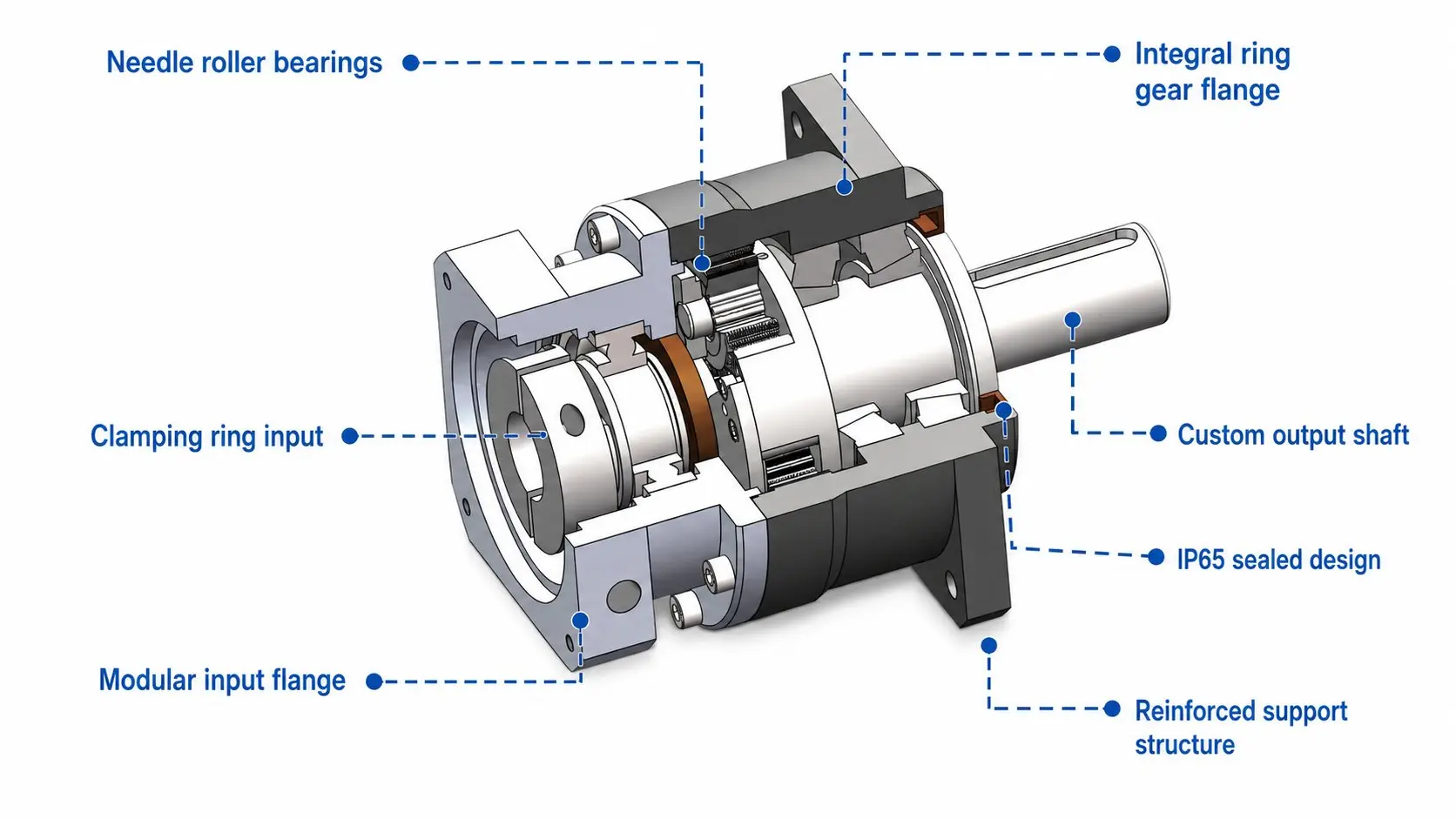
EP-FAD planetary gearbox cross-section showing sealed lubrication chamber — NYOGEL 792D synthetic grease fills gear mesh and bearing races in precision series

The sealed lubrication chamber of an EP-FAD gearbox contains NYOGEL 792D synthetic grease as a lifetime fill. The grease cannot be changed in the field — the sealed housing is the engineering guarantee that the specified grease remains in the gear mesh and bearings for the full 30,000-hour design life without contamination or replenishment.

When a machine designer selects an EP-FAD gearbox, they are implicitly also selecting NYOGEL 792D as the lubricant for the life of that gearbox. When they select EP-FPG, they are selecting CASTROL LMX. These two greases have meaningfully different properties — a 40°C gap in minimum operating temperature, a 35°C gap in maximum continuous operating temperature, different chemical resistance profiles, and different cleanroom particle emission characteristics. In the right application, either grease is excellent. In the wrong application, the mismatch between the gearbox’s installed lubricant and the deployment environment is a failure that cannot be corrected without replacing the sealed gearbox unit.

This guide explains what both greases are, why they were assigned to their respective EP-series, and — most practically — how to identify whether your specific application requires one over the other. It also explains the one scenario where Korea Ever-Power will substitute NYOGEL 792D into an EP-FPG/FPGA unit normally supplied with CASTROL LMX: cold-climate deployments where the operating environment falls below 0°C.

Both greases are sealed lifetime fills — neither requires scheduled relubrication within the gearbox design life. Neither has external access ports or grease nipples. The distinction between them is not about maintenance intervals (both are zero-maintenance) but about the physical chemistry of the grease under the deployment conditions your application actually experiences.

🧴
Default Assignments — Which Series Gets Which Grease
NYOGEL 792D is the standard fill for: EP-FAB, EP-FABR, EP-FAD, EP-FADR, EP-FADS, EP-FAL, EP-FALR. These are the precision series (P0/P1/P2 grades, DIN Class 5 gears). CASTROL LMX is the standard fill for: EP-FPG, EP-FPGA. These are the economy series (standard/P2 grades, DIN Class 6–7 gears). The assignment is not arbitrary — NYOGEL 792D’s lower minimum temperature (−40°C vs 0°C) and cleanroom validation justify its use in precision series that are more likely to be deployed in cold-climate, cleanroom, or solvent-exposed environments. CASTROL LMX’s lower cost and adequate performance in normal industrial temperature ranges suits the economy series’ pricing model. Custom specification: NYOGEL 792D can be substituted into EP-FPG/FPGA on request for cold-climate applications. CASTROL LMX is not substituted into precision series units.

Lubricant Suitability Matrix — Which Grease for Which Deployment Scenario

The matrix below maps eight deployment scenarios against both lubricant options. ✓ indicates suitable under normal conditions. ✗ indicates not suitable — risk of lubricant failure, contamination event, or application incompatibility. ⚠ indicates conditional suitability — suitable with caveats that must be confirmed before specifying.

Deployment Scenario NYOGEL 792D
(precision series std)
CASTROL LMX
(economy series std)
H1 Food-Grade
(custom option)
Critical Constraint Engineering Rationale
Standard industrial
Indoor, 5°C–60°C ambient
Not required None — both within temperature range Use whichever comes with the ordered series. No lubricant upgrade required for standard factory automation environments.
Cold climate / outdoor
Below 0°C operating temp
Not required CASTROL LMX viscosity becomes excessive below 0°C → motor overload at cold start EP-FPG/FPGA for cold climate: specify NYOGEL 792D substitution option at order. NYOGEL rated to −40°C continuous, −50°C start. Precision series (FAD/FAB): standard NYOGEL — no change needed.
High temperature zone
Gearbox housing >90°C
Not required CASTROL LMX continuous limit 90°C — housing above this risks ester oil oxidation and thickener breakdown NYOGEL 792D rated to +125°C continuous, +150°C peak. For high-temperature drives (stenter frames, drying oven conveyors), EP-FPG with NYOGEL substitution or upgrade to EP-FAD recommended. Confirm housing temperature before specifying CASTROL LMX.
ISO Class 5–6 cleanroom
Pharmaceutical / semiconductor
Not required
(sealed unit)
CASTROL LMX not validated for ISO Class 5 particle emission. NYOGEL 792D validated for zero-particle emission in sealed EP-series housings at ISO Class 5. Precision series (FAD P0/P1, FADS P0) with standard NYOGEL 792D satisfy cleanroom particle requirements in sealed operation. Economy series (FPG with CASTROL LMX) should not be used in ISO Class 5 cleanrooms without lubricant qualification testing.
Food processing zone
Incidental contact possible
Neither NYOGEL 792D nor CASTROL LMX is NSF H1 registered. H1 registration required if incidental food contact is possible. Both greases are sealed — no external grease points, no relubrication. If the IP seal remains intact (100% tested on EP-series), lubricant-food contact is by design prevented. H1 specification required only if the gearbox is in a zone where regulatory compliance mandates H1 regardless of seal integrity. Contact Korea Ever-Power for H1 option availability.
Solvent / chemical exposure
Printing, gravure, pharma wash
Not required CASTROL LMX ester base oil can hydrolyse under prolonged contact with strong acids or alkalis. Toluene, acetone, MEK exposure can dilute ester base oil through a compromised IP seal. NYOGEL 792D PAO (polyalphaolefin) base is chemically inert to most industrial solvents. For gravure press (toluene/ethyl acetate), printing blanket wash (IPA, naphtha), pharmaceutical CIP (NaOH, H₂O₂): NYOGEL 792D via precision series is the correct specification. If CASTROL LMX must be used, confirm chemical compatibility for the specific wash formulation.
Saltwater / marine spray
Aquaculture, coastal outdoor
Not required Both greases have adequate water resistance in sealed housing. Below 0°C ocean temperature: specify NYOGEL 792D. IP65 sealed housing prevents saltwater ingress — both greases are protected. CASTROL LMX lithium complex thickener is water-resistant (resists emulsification). NYOGEL PAO base is hydrophobic. Cold-ocean aquaculture (below 0°C): NYOGEL required.
Surgical / sterile field
OR, ISO Class 5, robot wrist
CASTROL LMX not validated for ISO Class 5 / operating theatre environments. H1 only required if sterility regulations mandate NSF H1 labelling regardless of containment. EP-FADS and EP-FAD with NYOGEL 792D in sealed housing: validated for ISO Class 5 particle emission. Used in surgical robots and ISO 5 pharmaceutical cleanrooms. CASTROL LMX should not be used in surgical field applications without independent particle validation.
Legend:
Suitable under normal operating conditions within specified temperature range
Conditional — review stated constraint before specifying
Not suitable — risk of lubricant failure, particle emission, or regulatory non-compliance

Lubricant suitability assessments are based on the sealed EP-series housing design (IP65 on every unit) and the stated lubricant properties for NYOGEL 792D and CASTROL LMX under normal operating conditions. Actual suitability depends on housing temperature, chemical concentration, and seal integrity — all of which should be confirmed for specific applications. Contact Korea Ever-Power application engineering for application-specific lubricant guidance.

Technical Profiles

NYOGEL 792D and CASTROL LMX — Full Technical Profiles and Why They Differ

Understanding why the two greases have different properties — and why those properties matter for gearbox performance — requires understanding their base oil and thickener chemistry. The following profiles explain both greases at the level needed to make informed application decisions.

🔬
The Significance of NLGI Grade Difference — Grade 1 vs Grade 2
NYOGEL 792D is NLGI Grade 1 (semi-fluid to soft); CASTROL LMX is NLGI Grade 2 (medium stiffness). This difference matters for two reasons. First, at low temperatures: Grade 1 greases flow more readily than Grade 2 greases at the same base oil viscosity — meaning NYOGEL 792D is more easily displaced from gear tooth surfaces at cold start than CASTROL LMX, even setting aside the base oil viscosity difference. Second, in high-speed applications: the churning losses from a stiffer Grade 2 grease at high pitch-line velocities are slightly higher than from a softer Grade 1 grease. For EP-FAD units running at 5,000–6,000 rpm input (the highest speed class in EP-series), NYOGEL 792D’s Grade 1 consistency contributes to the series’ low heat generation at rated speed. For EP-FPG units typically running at 1,000–3,000 rpm, CASTROL LMX Grade 2 is fully appropriate — the stiffer consistency provides better film retention in the slower, higher-contact-force gear mesh of economy-tier applications.

NYOGEL 792D
Nye Lubricants | PAO synthetic hydrocarbon | Precision EP-series standard
Base oil type Polyalphaolefin (PAO) synthetic hydrocarbon
Thickener Fumed silica (inorganic)
NLGI consistency Grade 1 (semi-fluid to soft)
Temp range (continuous) −40°C to +125°C
Temp range (peak) +150°C (brief excursions)
Base oil viscosity (40°C) ~95 cSt
Colour White / off-white translucent
Water resistance Excellent (PAO is hydrophobic)
Chemical resistance Excellent vs most solvents, dilute acids/alkalis, fertilisers
Cleanroom particle ISO Class 5 validated (sealed)
NSF H1 food-grade No (standard NYOGEL 792D)
EP-series standard fill FAB, FABR, FAD, FADR, FADS, FAL, FALR
PAO advantage: Polyalphaolefin base oil is chemically similar to a purified version of mineral oil but is synthesised rather than refined — it contains no wax, no aromatic compounds, and no sulphur. This gives PAO its wide temperature range (does not wax at low temperatures, does not oxidise at high temperatures), its inertness to most chemicals, and its hydrophobic nature. The fumed silica thickener is an inorganic material that is thermally stable, does not dissolve in solvents, and contributes to NYOGEL’s high tackiness — useful in vertical-shaft gearboxes where grease must stay on the gear teeth.

CASTROL LMX
Castrol Industrial | Synthetic ester | Economy EP-series standard
Base oil type Synthetic ester base oil
Thickener Lithium complex soap
NLGI consistency Grade 2 (medium stiffness)
Temp range (continuous) 0°C to +90°C
Temp range (brief) −10°C start (with higher torque); +120°C brief
Base oil viscosity (40°C) ~68 cSt
Colour Light beige / cream
Water resistance Good (lithium complex resists emulsification)
Chemical resistance Good — ester base may hydrolyse in strong acids/bases or prolonged solvent exposure
Cleanroom particle Not specifically validated for ISO Class 5
NSF H1 food-grade No (standard CASTROL LMX)
EP-series standard fill FPG, FPGA (economy series)
Lithium complex advantage: Lithium complex soaps produce a thermally stable, shear-stable thickener network that holds the base oil effectively at elevated temperatures (better than simple lithium soaps). The synthetic ester base oil has a good viscosity-temperature profile (better cold-flow than mineral oil, better high-temperature stability than standard mineral oil) without PAO’s wider extreme-temperature performance. For normal industrial temperature ranges (5°C to 85°C), CASTROL LMX is an excellent gear grease at lower cost than NYOGEL 792D.

Side-by-Side Technical Comparison

One additional dimension worth understanding is material compatibility with the gear and housing alloys in EP-series gearboxes. Both NYOGEL 792D and CASTROL LMX are formulated to be compatible with the steel gear alloys (carburised and case-hardened for EP-FAB/FAD; through-hardened for EP-FPG/FPGA), the aluminium alloy housings, and the NBR and FKM elastomers used in the dynamic shaft seals. The ester base oil in CASTROL LMX has marginally better lubricity (film strength at tooth contact) than PAO at equivalent viscosity — which is one reason CASTROL LMX is well-suited to the lower-speed, higher-contact-stress conditions of economy series gearboxes where the gear geometry produces a higher tooth contact stress per unit area than the finer-pitched, DIN Class 5 gears of the precision series. NYOGEL 792D’s PAO base provides better elastomer compatibility across a wider temperature range — PAO does not cause the elastomer swell or shrink that some ester oils produce in NBR seals at elevated temperatures, which contributes to NYOGEL 792D’s better IP seal performance at the temperature extremes of its rated range. This material compatibility consideration reinforces the series assignments: NYOGEL in precision series with DIN Class 5 fine-pitched gears and wider temperature range deployment; CASTROL LMX in economy series with coarser gears operating in normal industrial temperature bands.

Property NYOGEL 792D CASTROL LMX Selection Implication
Minimum operating temp −40°C 0°C Any application below 0°C requires NYOGEL — or NYOGEL substitution option for FPG/FPGA
Maximum continuous temp +125°C +90°C High-temp applications (stenter, drying): confirm housing temp ≤90°C for LMX; if not, upgrade to precision series with NYOGEL
Viscosity at −20°C ~600 cSt (remains pumpable) ~8,000–15,000 cSt (nearly solid) At cold start −20°C, CASTROL LMX resistance can exceed motor starting torque — inverter overload trip
ISO Class 5 cleanroom ✓ Validated (sealed) ✗ Not validated Pharmaceutical, semiconductor, surgical robot: NYOGEL required; precision series only
Chemical resistance Excellent (PAO inert) Good (ester hydrolysis risk) Solvent-heavy environments (gravure, pharma wash): prefer NYOGEL; CASTROL LMX acceptable for most industrial chemicals
Water resistance Excellent (hydrophobic PAO) Good (Li complex) Both adequate with intact IP65 seal; NYOGEL superior if trace ingress occurs
NSF H1 food-grade No (standard formulation) No (standard formulation) H1 custom option available on request for both series where regulatory compliance requires it
Series assignment FAB/FAD/FADS/FAL/FALR FPG/FPGA Can specify NYOGEL substitution for FPG/FPGA at order — see cold-climate option

Engineering Deep Dive

Why CASTROL LMX Fails Below 0°C — The Cold-Start Physics Explained
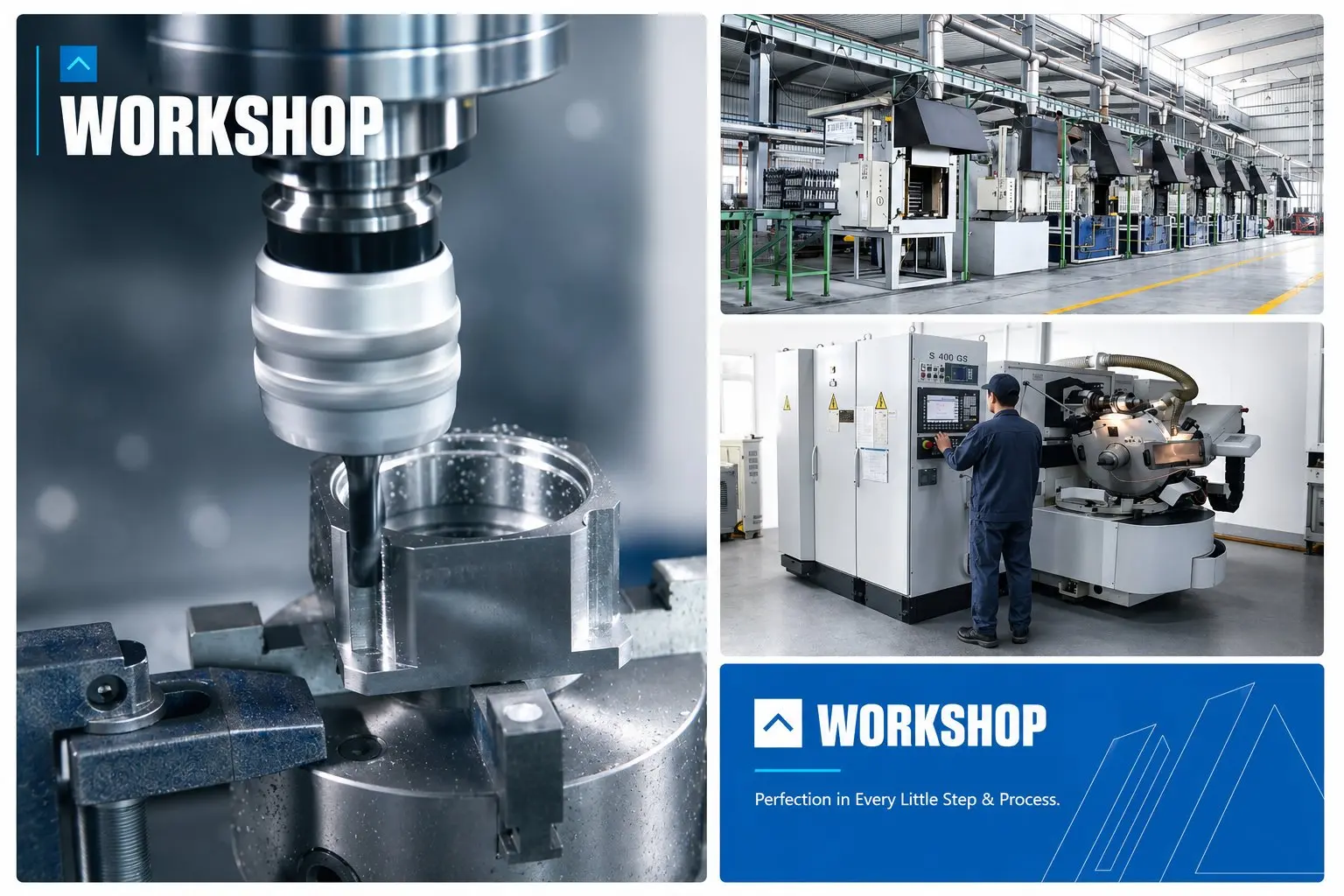
Korea Ever-Power gear manufacturing workshop — EP-FPG economy series gearboxes filled with CASTROL LMX or NYOGEL 792D depending on deployment specification

Operating Temperature Range

NYOGEL 792D
−40°C

+125°C

CASTROL LMX
−40°C

+90°C

Hatched zone = not rated (0°C limit)

The viscosity of a grease’s base oil increases dramatically as temperature decreases. All lubricants behave this way — the molecular motion that gives a fluid its ability to flow slows down in the cold, and the viscosity rises. What distinguishes NYOGEL 792D (PAO base) from CASTROL LMX (ester base) is the rate at which viscosity increases as temperature drops below 0°C.

PAO (polyalphaolefin) base oils have exceptionally low pour points — the base oil in NYOGEL 792D remains fluid down to −50°C and continues to flow (with increasing resistance) to −40°C continuous operation. At −20°C, NYOGEL 792D’s base oil viscosity is approximately 600 centistokes — roughly 6× its room-temperature value, but still a pumpable, flowable fluid that can be displaced from gear tooth surfaces under the contact pressure of the gear mesh.

Synthetic ester base oils, used in CASTROL LMX, have excellent viscosity-temperature characteristics relative to mineral oil — but not as wide as PAO. At −20°C, the ester base oil in CASTROL LMX can reach 8,000–15,000 centistokes — effectively a solid at the scale of a gear tooth film thickness. When a motor attempts to start against this nearly solid grease resistance at cold ambient, the start-up torque required to move the gear mesh through the viscous grease can be 5–10× the normal start torque. For a small servo motor driving an EP-FPG seeder unit on a prairie grain seeder at −15°C ambient, this excess start torque triggers the drive inverter’s overcurrent protection — the motor trips without completing its first rotation, which is exactly the field failure mode reported by Canadian seeder OEM customers before switching to NYOGEL 792D.

The Cold-Start Failure Mode — What It Looks Like in the Field
In a cold-climate failure event: the servo motor attempts to start against a gearbox filled with near-solid CASTROL LMX. The motor current rises immediately to the inverter’s current limit without producing rotation. The inverter trips on overcurrent protection — typically within 200–500 ms. The machine controller registers a servo fault and stops the sequence. The operator resets the fault and retries — the same trip occurs immediately. Only after the gearbox has warmed up (either from environmental heating or from multiple brief motor energisations that generate resistive heat in the stator) will the grease thin sufficiently to allow motor starting. In an agricultural machine at the start of a cold spring day, this can mean 30–60 minutes of failed starts before the machine will operate. The solution — NYOGEL 792D substitution — eliminates this failure mode entirely at the source.

The temperature performance gap is the primary reason NYOGEL 792D is the standard fill for precision EP-series gearboxes: precision series are more frequently used in cold-climate environments (pharmaceutical refrigeration, cold-chain packaging, cryogenic handling, arctic field robotics) where CASTROL LMX’s 0°C lower limit would be a deployment blocker. Economy series gearboxes on standard industrial equipment seldom operate below 5°C — CASTROL LMX is fully appropriate for those applications.

There is a related phenomenon at the upper temperature end that is less frequently discussed but equally important for high-duty applications: thermal runaway. In a gearbox running at high speed under continuous load, the gear mesh and bearing friction generate heat faster than the housing can dissipate it to the environment. The internal temperature rises until an equilibrium is reached where heat generation equals heat dissipation. For CASTROL LMX, this equilibrium temperature must remain below +90°C — if the gearbox is undersized for the duty cycle, or if it operates in a hot ambient (stenter frame at 80°C ambient, for example), the internal temperature can reach +90°C even at modest speeds. At that point, CASTROL LMX’s ester base oil begins to oxidise, and the lithium complex thickener starts to soften and lose its oil-retention characteristics. The grease does not fail immediately — degradation is gradual over hundreds of hours — but each hour above the rated temperature accelerates the lubricant’s depletion and increases the long-term wear rate. NYOGEL 792D’s +125°C continuous rating provides a significantly larger thermal margin for high-duty or hot-ambient applications, which is one reason Korea Ever-Power’s application engineering team recommends specifying the precision series (standard NYOGEL fill) for continuous-duty applications where housing temperatures regularly approach +80°C.

A practical consequence of the viscosity-temperature difference between the two greases is visible in warm-up drift — a phenomenon well known to printing press and precision machine operators. When a cold gearbox starts from ambient temperature (say, +15°C on a factory floor in winter), the internal grease is more viscous than at steady-state operating temperature (+50–65°C typical for a loaded gearbox). As the gearbox warms during the first 15–30 minutes of operation, the grease viscosity decreases and the gear mesh friction torque changes. This produces a very slight apparent change in backlash and gear mesh compliance that the servo controller may interpret as a position drift — the “warmup drift” that press engineers observe as a small register shift during the first hundred impressions after a cold start. NYOGEL 792D’s lower viscosity change per degree Celsius (PAO has a better viscosity-temperature index than ester base) produces less warmup drift than CASTROL LMX under equivalent conditions. For high-precision applications where warmup drift must be minimised, NYOGEL 792D — and therefore the precision series — is the correct specification for this reason as well.

Ordering Guide

When and How to Specify NYOGEL 792D in EP-FPG/FPGA — The Cold-Climate Substitution Option

Korea Ever-Power customer service team — available to confirm lubricant specification and cold-climate NYOGEL 792D option for EP-FPG economy series gearboxes

Korea Ever-Power customer service confirms NYOGEL 792D substitution availability for EP-FPG and EP-FPGA within one business day of request. The substitution is a production-level change — the gearbox is assembled with NYOGEL 792D instead of CASTROL LMX before sealing.

When to Specify the NYOGEL Cold-Climate Option

Specify NYOGEL 792D substitution for EP-FPG/FPGA whenever the gearbox may experience operating temperatures below 0°C — including ambient temperatures at the gearbox housing, not just process temperatures. The relevant temperature is the housing temperature at the moment the motor attempts to start, not the steady-state operating temperature. In well-insulated agricultural machines, the housing temperature at 7:00 AM in early spring can be −5°C to −15°C even when the daytime operating temperature is +10°C.

Specific applications where the NYOGEL substitution is typically required: precision seeders and spreaders in Northern Europe, Canada, and North America that operate in early spring (April–May in northern latitudes, where overnight frost is common); autonomous agricultural robots deployed year-round in cold climates; outdoor conveyor drives in warehouses or distribution centres that are not climate-controlled; fish farming and aquaculture equipment in cold-ocean environments; outdoor robotic systems with overnight shut-down and early-morning cold start.

Specific applications where CASTROL LMX is adequate without substitution: all indoor industrial automation above 5°C; stenter frame transport drives in heated factory halls; barn automation in livestock facilities; standard packaging and manufacturing automation; indoor logistics and warehousing above 5°C ambient.

A second category where lubricant review is warranted even for indoor applications is thermal accumulation in sealed enclosures. Textile stenter frames, industrial drying ovens, and curing tunnel conveyors operate with elevated ambient temperatures around the gearbox housing — not from the gear mesh friction, but from the surrounding process environment. A stenter frame transport drive mounted inside a 120°C drying chamber will reach a housing temperature of 80–95°C in steady state, depending on the gearbox thermal mass and the process air temperature. This is above the CASTROL LMX continuous limit of +90°C and within NYOGEL 792D’s comfortable operating range. For these applications, the correct specification is EP-FPG/FPGA with NYOGEL 792D substitution — the economy series remains appropriate for the precision and cost requirements of transport drives, but the lubricant must be NYOGEL for the thermal environment. Korea Ever-Power application engineering confirms the correct specification for process-temperature applications when the gearbox housing temperature profile is provided.

How to Order the Substitution

The NYOGEL 792D cold-climate option is a production specification — it must be specified at order, not requested as a post-delivery modification. The sealed gearbox housing cannot be opened and re-filled in the field without voiding the IP65 certification and the backlash grade stamp.

Order Specification — Cold-Climate NYOGEL Option
Add “-NY” suffix or note “NYOGEL 792D lube” in the order remarks when ordering EP-FPG or EP-FPGA. Example:
EP-FPG – 060 – 10 – P2 – C3 – NYOGEL 792D
Economy series FPG, 60 mm frame, 10:1 ratio, P2 grade, C3 motor adapter, cold-climate NYOGEL 792D fill
Note: Standard stock units contain CASTROL LMX. NYOGEL substitution requires 3–5 business days additional lead time to ensure correct production scheduling. Available for all FPG/FPGA frame sizes and ratios.
📋
Confirming the Right Specification for Your Deployment
If you are uncertain whether your deployment environment requires the NYOGEL substitution, send Korea Ever-Power the following: deployment location (country/region), minimum expected ambient temperature at the gearbox housing at time of motor start (not daytime operating temperature), and the application type. Korea Ever-Power will confirm whether NYOGEL 792D substitution is required for your specific configuration. Contact: [email protected] — lubricant specification confirmation within one business day.

Selection Checklist

Lubricant Selection Checklist — Five Questions to the Right Grease Specification

For most applications, lubricant selection requires no action — the EP-series default assignment is correct. The five questions below identify the minority of applications where the default needs to be reviewed or changed. Work through them for every EP-series gearbox in environments that might approach the boundary conditions of either lubricant.

Five-Question Lubricant Specification Review
Q1
Will the gearbox housing be below 0°C at any time during operation or motor start?
Yes → Require NYOGEL 792D. If the ordered series is FPG/FPGA (normally CASTROL LMX), add NYOGEL substitution to the order. Precision series (FAB/FAD/FAL/etc.) already contain NYOGEL — no change needed. No → Continue to Q2. Unsure → Contact Korea Ever-Power with location and minimum ambient — they confirm which lubricant applies.
Q2
Will the gearbox housing reach above 90°C continuously?
Yes → CASTROL LMX is not suitable above 90°C continuous. If the gearbox is FPG/FPGA: upgrade to precision series (FAD/FAB) with NYOGEL 792D (rated to +125°C). Alternatively, specify NYOGEL substitution for FPG/FPGA if precision series is not required for other reasons. No → Continue to Q3.
Q3
Is the gearbox deployed in an ISO Class 5 cleanroom or sterile field?
Yes → Require NYOGEL 792D in a precision series gearbox with individual IP test certification. Economy series with CASTROL LMX should not be used in ISO Class 5 environments without independent particle validation. No → Continue to Q4.
Q4
Is the gearbox in a zone requiring NSF H1 food-grade lubricant?
Yes → Neither NYOGEL 792D nor CASTROL LMX in standard formulation is NSF H1 registered. Contact Korea Ever-Power for H1 lubricant option availability for the specific frame size and series. Both greases are sealed — incidental contact is prevented by design when IP seal integrity is maintained. H1 specification is required when regulatory compliance mandates it regardless of containment. No → Continue to Q5.
Q5
Is the gearbox exposed to aggressive solvents or chemical wash cycles?
Yes (strong solvents: toluene, MEK, chlorinated) → Prefer NYOGEL 792D via precision series. PAO base is significantly more chemically resistant than ester base. IP65 sealed housing prevents ingress in normal operation — but if the IP seal has any micro-defect, NYOGEL 792D provides a second line of defence that CASTROL LMX does not. Yes (moderate: IPA, water-based cleaners) → Both lubricants adequate with intact IP65 seal. No → Default lubricant (series assignment) is correct — no action required.

Related EP-Series and Technical Guides
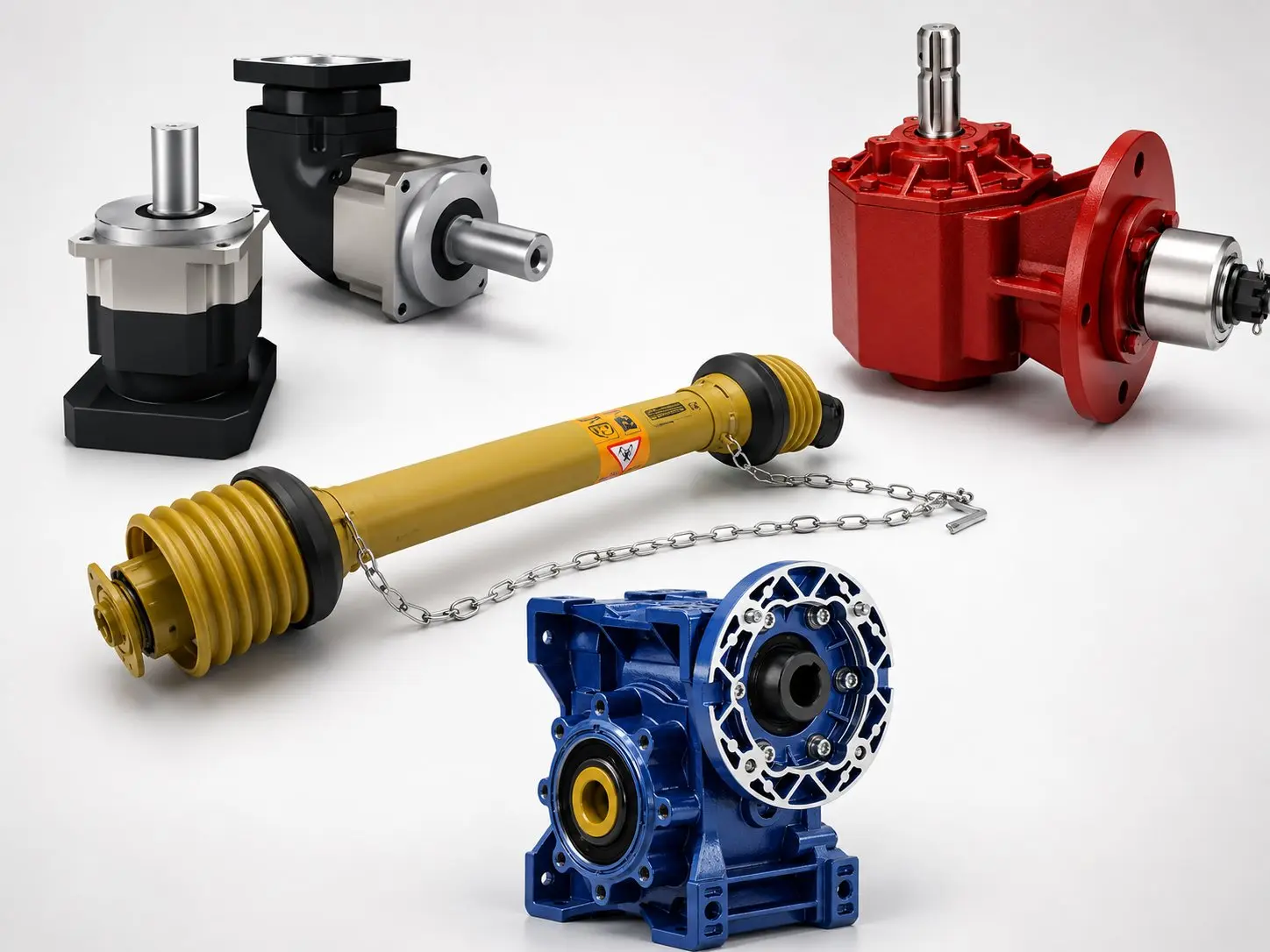
Korea Ever-Power EP series planetary gearbox product range — precision series with NYOGEL 792D, economy series with CASTROL LMX, both sealed lifetime fill

NYOGEL 792D is the standard fill for all precision EP-series: EP-FAB, EP-FAD, EP-FADS, EP-FAL, and EP-FALR. CASTROL LMX is the standard fill for EP-FPG/FPGA (with NYOGEL 792D substitution available for cold-climate applications on request). Browse the full EP series product catalogue.

For the agricultural environment severity matrix that uses the 0°C CASTROL LMX constraint as a key decision factor: see the Precision Agriculture application guide on this site. For related mechanical drive components: cvjointdriveshaft.com. For worm gearbox lubricant comparison context: worm-reducers.xyz.

Frequently Asked Questions — EP-Series Lubricant Selection

Can I change the lubricant in a sealed EP-series gearbox after delivery?
No — the EP-series gearbox housing is sealed at the factory as part of the IP65 certification process. The IP65 pressure decay test is performed on the sealed unit before shipment. Opening the housing to change the lubricant would void the IP65 certification (the seal would need to be re-tested), invalidate the backlash grade stamp (assembly conditions affect backlash), and potentially introduce contamination into the gear chamber. The lubricant specification must be determined before ordering and specified at order. If you have received EP-FPG/FPGA units with CASTROL LMX and need NYOGEL 792D for a cold-climate application, the correct solution is to return the units and re-order with the NYOGEL substitution specification — or, if the units have not yet been deployed, contact Korea Ever-Power to determine whether a factory re-specification is possible before deployment.
Is NYOGEL 792D the same as other “white greases” used in food and medical equipment?
NYOGEL 792D is a specific Nye Lubricants formulation — a PAO synthetic hydrocarbon base oil with fumed silica thickener and a characteristic white/translucent appearance. It is not interchangeable with other white greases, which may use silicone, PTFE, or mineral oil base formulations with different chemical properties and temperature ranges. NYOGEL 792D is specifically selected for EP-series gearboxes because of its wide temperature range (−40°C to +125°C), its chemical inertness (PAO base), and its validated low-particle emission in sealed housings. It is not an NSF H1 food-grade registered product in its standard formulation — if NSF H1 is required, a different lubricant from Korea Ever-Power’s H1 option list is needed. If you see a reference to “white grease” in a specification and are uncertain whether NYOGEL 792D satisfies it, check whether the specification requires NSF H1 registration, ISO 21469 compliance, or specific chemical composition requirements, and confirm with Korea Ever-Power.
What happens if CASTROL LMX is used at −5°C — will it fail immediately or gradually?
The failure mode is immediate on cold start, not gradual. At −5°C, the CASTROL LMX base oil viscosity is high enough that the grease behaves as a stiff paste rather than a fluid. When the motor attempts to accelerate the gear train from standstill, the gear teeth must displace this stiff grease from the contact zones to establish the elastohydrodynamic lubrication film. The resistance to this displacement is significant at −5°C — not quite as severe as at −15°C or −20°C, but potentially above the rated starting torque of small servo motors used in economy applications. The failure presents as: motor current reaches the inverter current limit immediately on start command, the motor does not rotate or rotates very slowly, and the drive trips on overcurrent or “blocked rotor” fault. After the motor has been energised for a few seconds (generating stator heat that conducts to the gearbox housing through the motor mounting), the grease warms slightly and the next start attempt may succeed. This intermittent behaviour is the characteristic pattern that indicates a cold-start lubricant issue rather than a mechanical failure.
Does the NYOGEL 792D substitution in EP-FPG/FPGA affect the gearbox warranty or design life?
No — the NYOGEL 792D substitution in EP-FPG/FPGA is a supported production specification, not a non-standard modification. When ordered with the NYOGEL specification, the unit is assembled with NYOGEL 792D instead of CASTROL LMX before the housing is sealed and the IP65 test is performed. The IP65 pressure test is the same regardless of lubricant. The backlash grade measurement and stamp are performed after assembly with NYOGEL 792D, so the nameplate stamp reflects the actual unit with the specified lubricant. The design life specification (20,000 hr S5 for FPG/FPGA) applies to NYOGEL 792D fill within the NYOGEL rated temperature range (−40°C to +125°C). NYOGEL 792D’s higher load-carrying capacity compared to CASTROL LMX may, if anything, slightly extend the gear wear life — though Korea Ever-Power specifies the same 20,000 hr design life for both lubricant options on FPG/FPGA to maintain conservative specification consistency.
At what point should I upgrade from EP-FPG with NYOGEL to EP-FAD for extreme cold?
The lubricant substitution (NYOGEL 792D in EP-FPG) handles the cold-temperature problem. The decision to upgrade from EP-FPG to EP-FAD (or EP-FAB) is separate and driven by precision and service-life requirements, not lubricant. If your application requires ≤8 arc-min standard grade, NYOGEL-filled EP-FPG is the correct solution for cold climates. If your application requires ≤3 arc-min P1 or ≤1 arc-min P0, or if 30,000 hr design life is needed vs FPG’s 20,000 hr, then EP-FAD or EP-FAB is the correct choice — and those series already contain NYOGEL 792D as standard. The only scenario where upgrading from FPG to FAD specifically for lubricant reasons applies is if the operating temperature exceeds +90°C (CASTROL LMX limit), requiring NYOGEL for its +125°C capability, and if NYOGEL substitution in FPG is not available for a specific stock requirement. In that case, EP-FAD with standard NYOGEL is the direct replacement.

Confirm the Right Lubricant Specification for Your Application
Send your deployment location, minimum expected housing temperature, application type, and ordered EP-series — Korea Ever-Power will confirm whether the standard lubricant applies or whether NYOGEL 792D substitution or H1 option is required, within one business day.

Confirm Lubricant Specification →

Editor: Cxm