Application Guide
Marine and Offshore Automation Faces Three Simultaneous Failure Threats That No Other Industry Combines — Corrosion, Shock, and Water Ingress
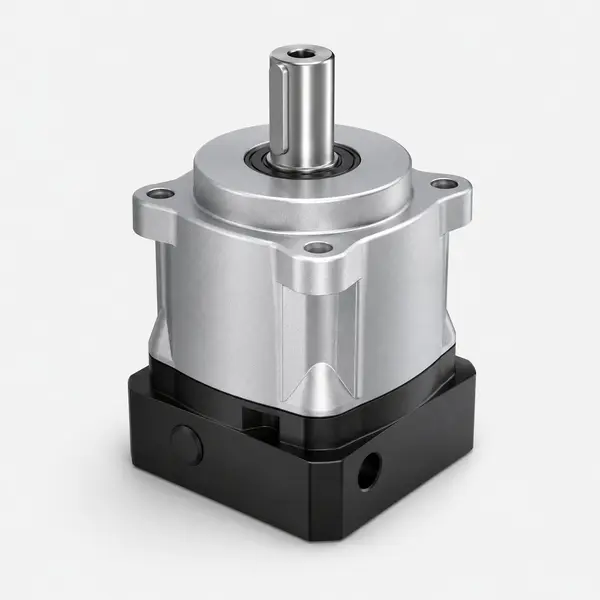
EP-FAB series — the primary choice for marine deck automation, offshore crane slewing, and dynamic positioning thruster drives. For marine applications, the standard aluminium housing can be upgraded to 316L stainless steel (C5-M offshore corrosion class), and the standard NBR shaft seals upgraded to FKM for saltwater chemical resistance. IP67 and IP68 sealing requires a purpose-built seal assembly beyond standard IP65.
Every application covered in Korea Ever-Power’s guide series faces a primary engineering challenge: CNC machining demands backlash precision, logistics automation demands cycle count endurance, clean energy demands seal longevity in UV-exposed outdoor environments. Marine and offshore automation is the only sector that simultaneously imposes three independent and severe failure threats on the drive component: electrochemical corrosion from salt water and salt spray; dynamic shock loading from wave-induced vessel motion; and water ingress risk from immersion, splash, or pressurised wash. Any one of these three threats is sufficient to destroy an unspecified industrial gearbox within months in a marine environment. All three acting simultaneously make marine the most technically demanding application environment in this guide series.
This article is also where the IP sealing story that runs through this guide series reaches its conclusion. Earlier articles covered IP65 (standard industrial dust and water-jet protection), IP69K (food factory high-pressure hot washdown), and the implications of each for gearbox seal design. Marine applications require IP67 (immersion to 1 metre for 30 minutes — the standard for deck equipment exposed to wave wash) and IP68 (continuous immersion to a specified depth — for ROV manipulators, subsea actuators, and bilge equipment). IP67 and IP68 are not simply higher-rated versions of IP65 — they require fundamentally different seal geometries, materials, and validation test procedures that change the gearbox design at the engineering level.
Marine and offshore is also the only sector in this guide series where a third-party certification authority — DNV-GL, Bureau Veritas, or Lloyd’s Register — may require type approval of the drive components as a condition of vessel class certification. The diversity of marine applications is also broader than any other sector: a single vessel may simultaneously require standard EP-FAD P1 for the protected engine room auxiliary drives (identical to a factory installation), EP-FAB P1 with IP67 and C5-M coating for the deck crane slewing drives (similar to an outdoor industrial drive but with marine corrosion specification), and a pressure-compensated custom configuration for any subsea components. Understanding which application category applies to which drive on the vessel is the first step in the specification process — and this categorisation is determined by the application’s physical environment (protected, exposed, or submerged) rather than its function (propulsion, positioning, or lifting).
The global marine industry’s growth — driven by offshore wind installation activity, deep-water oil and gas exploration, autonomous vessel development, and expanding marine science and survey operations — is creating increasing demand for compact, reliable electric drive components in marine environments. The shift from hydraulic to electric actuation is particularly significant: hydraulic systems have been the traditional technology for deck cranes, thruster pods, and ROV manipulators, but they carry inherent risks of hydraulic fluid release to sea (a major environmental concern in offshore operations) and require complex pressure circuits that are difficult to maintain in remote offshore locations. Electric actuation using sealed planetary gearboxes eliminates the hydraulic fluid release risk, simplifies the system architecture, and enables remote condition monitoring — advantages that are increasingly decisive in the procurement evaluation for new offshore installations and vessel refits.
This regulatory dimension is absent from all other applications in the series and changes the procurement process: instead of selecting a gearbox from catalogue and confirming the specification with Korea Ever-Power, the procurement engineer may need Korea Ever-Power to present type approval documentation to the certifying authority as part of the vessel’s classification survey. This guide explains which applications trigger certification requirements and what documentation Korea Ever-Power can provide to support the process.
Marine Protection Level and Application Severity Matrix — Six Application Types
The matrix below classifies six marine and offshore application types by their protection, corrosion, shock, and certification requirements. The colour coding reflects the level of specification work beyond standard EP-series: green indicates that standard EP with IP67 option is adequate; amber indicates that additional material or coating options are required; red indicates a custom or specialised configuration requiring direct Korea Ever-Power consultation. The Certification column indicates which applications typically require class society type approval documentation.
| Application | IP rating | Depth / pressure |
Corrosion class |
Shock class |
Certification | Series | Required options beyond standard |
|---|---|---|---|---|---|---|---|
| Deck automation Cranes, winches, hatches |
IP67 | 1m/30min | C5-M | 25g IEC Ec |
DNV/BV optional |
EP-FAB P1/P2 | IP67 seal upgrade. 316L stainless housing or C5-M marine coating. FKM shaft seals. Anodised + sealed fastener holes. Shock class Ec confirmation. |
| DP thruster drive Azimuthing pod rotation |
IP67/68 | ≤10m splash zone |
C5-M offshore |
15g propeller vib. |
DNV/BV REQUIRED |
EP-FAB P1 oil bath |
Type approval documentation (DNV-GL or BV). Oil bath lubrication. IP67/68. 316L housing. FKM seals. Redundant drive where DP Class 3. Vibration confirmation at propeller frequency. |
| ROV manipulator joints Electric arm, 300–3000m depth |
IP68 depth-rated |
300–3000m 30–300 bar |
Full seawater immersion |
Low stable depth |
Project- specific |
EP-FADS P0 custom |
Pressure-compensated oil-filled housing required. External pressure 30–300 bar — standard sealed design fails. Custom housing with pressure compensation port. Oil compatibility with seawater (no NYOGEL — mineral oil or synthetic compatible with immersion). Titanium or 316L housing for corrosion. |
| Offshore wind service vessel Crane, jack-up leg drives |
IP67 | 1m/30min | C5-M offshore |
25–40g wave + ops |
DNV/BV REQUIRED |
EP-FAB P1 220mm |
High shock class — confirm IEC 60068-2-27 shock certification. DNV/BV type approval documentation. C5-M marine coating. Very high torque for leg drives — confirm compound staging with Korea Ever-Power. |
| Subsea valve actuator Christmas tree, pipeline control |
IP68 depth-rated |
500–3000m 50–300 bar |
Seawater 25yr service |
Low subsea stable |
API 17D + project |
EP-FAD P2 custom |
25-year no-maintenance target. Oil-compensated housing. Seawater-compatible materials throughout. API 17D subsea tree valve specification. Titanium or super-duplex stainless housing. Contact Korea Ever-Power for project-specific specification. |
| Engine room auxiliary Governor, valve, pump drives |
IP54–IP65 | Protected indoor |
C3 engine room |
10–15g engine vib. |
Optional class note |
EP-FAD P1 standard |
Standard EP-FAD adequate. Protected engine room environment. IP65 sufficient. Standard NYOGEL 792D. Vibration class confirmation for engine frequency. Standard aluminium housing acceptable inside protected machinery space. |
Certification references: DNV-GL = Det Norske Veritas Germanischer Lloyd; BV = Bureau Veritas; LR = Lloyd’s Register; API 17D = American Petroleum Institute subsea tree equipment standard. Type approval requirement depends on vessel class and flag state. Confirm with the certifying authority for your specific project. Korea Ever-Power provides technical documentation to support classification surveys on request.
Materials Engineering
Why Aluminium Housings Fail in Marine Environments — and the Three-Layer Protection System That Prevents It
The Three Simultaneous Corrosion Mechanisms in Marine Environments
Standard aluminium alloy planetary gearbox housings are adequate for the vast majority of industrial applications — including outdoor solar installations, agricultural equipment, and general factory environments. Marine environments impose three corrosion mechanisms simultaneously that standard aluminium cannot withstand without specific protective measures.
Mechanism 1 — Chloride pitting corrosion: Aluminium naturally forms a thin aluminium oxide (Al₂O₃) passive layer that provides corrosion protection in clean air and non-chloride environments. In salt spray (sodium chloride, NaCl) environments, the chloride ions penetrate the passive layer through microscopic defects and initiate pitting corrosion directly on the aluminium surface. Once pitting starts, it is self-accelerating: the pit geometry traps a concentrated chloride solution that prevents re-passivation, and the pit deepens at an increasing rate. On an uncoated aluminium housing exposed to marine salt spray at a rate of 80 mg/m²·day (ISO 9227 class C5-M), visible pitting can appear within three to six months. Standard powder coat reduces the corrosion rate significantly but does not eliminate it — pinholes, edge gaps, and drilled holes that break through the coating become preferential pitting sites.
Mechanism 2 — Galvanic corrosion at fastener interfaces: When an aluminium housing is mounted using stainless steel bolts (the standard fastener choice for corrosion resistance), a galvanic couple forms in the presence of salt water electrolyte. Aluminium is electrochemically more active (anodic) than stainless steel (cathodic) in the galvanic series. Current flows through the salt water electrolyte from the aluminium anode to the stainless cathode, causing the aluminium to oxidise and dissolve at the bolt hole interface. Without protection, this galvanic attack is concentrated at exactly the bolt holes — the structural mounting points — causing progressive weakening of the housing mounting. In severe marine environments, this attack can reach depths of several millimetres within two years, compromising the threaded hole integrity.
Mechanism 3 — Crevice corrosion at seal interfaces: Any crevice where salt water can enter but not circulate becomes a site for accelerated corrosion. The salt concentration in a sealed crevice increases by evaporation, and the reduced oxygen supply prevents re-passivation. Gearbox housing features such as the lip seal groove, the mounting face interface, and any threaded fitting are potential crevice corrosion sites in marine environments. The crevice corrosion rate can be significantly higher than the general surface corrosion rate because of the concentrated electrolyte and the oxygen depletion effect.
Shock and Pressure Engineering
Wave Shock on Deck Equipment and External Pressure on Deep-Water ROV Gearboxes — Two Completely Different Engineering Challenges
Wave Shock on Deck Equipment
Vessels operating in open sea conditions experience dynamic accelerations from wave-induced hull motion. A vessel in Sea State 5 (significant wave height 2.5–4 metres, typical North Sea operating conditions) experiences vertical accelerations of up to 0.5g (5 m/s²) and horizontal accelerations up to 0.3g at deck level. Deck-mounted equipment — cranes, winches, hatch covers — experiences these accelerations continuously during sea passage. When a wave impacts the hull, the acceleration transient can reach 2–4g for 50–100 milliseconds. Deck equipment must be designed to withstand IEC 60068-2-27 shock class Ec (25g peak acceleration, 6ms half-sine pulse) for shipboard use, or higher classes for naval applications.
The three-planet load sharing principle of EP-FAB provides natural shock tolerance — as explained in the Logistics guide for jam events, the shock load is distributed across three planet gears simultaneously, reducing the instantaneous contact stress on any individual tooth to one-third of the total load. This is why EP-FAB, with its wider bearing span and larger shaft diameter providing additional structural mass and stiffness, is the correct choice for deck-mounted equipment exposed to wave shock. The IEC 60068-2-27 shock test certification confirms that the gearbox housing, bearing preload, and gear mesh integrity are maintained after repeated shock events at the rated class level.
The design of gearbox mounting for wave shock resistance is as important as the gearbox’s intrinsic shock tolerance. A gearbox that meets IEC 60068-2-27 class Ec on its own may fail prematurely if it is rigidly mounted to a deck plate that amplifies the hull motion through structural resonance. Deck equipment designers typically use vibration-isolating elastomeric mounts between the gearbox base and the deck structure, choosing mount stiffness to create a natural frequency well below the wave excitation frequency (typically 0.1–0.5 Hz for ocean waves), so that the mount absorbs the wave shock before it reaches the gearbox. The EP-FAB’s robust housing structure and conservative bearing preload specification also allow direct rigid mounting to a stiff deck structure when vibration isolation is not used — at the cost of slightly higher transmitted shock to the vessel structure. Korea Ever-Power can advise on mounting configuration for specific vessel applications when the deck structure stiffness and wave environment are provided.
A practical note on maintenance access for shock-exposed marine gearboxes: wave shock events produce cumulative fatigue damage in the housing fasteners and mounting bolts over the vessel’s life. Marine maintenance schedules for deck equipment typically include a fastener torque check at each 5-year docking survey — verifying that the housing mounting bolts have not loosened due to shock-induced fretting at the fastener interfaces. This is not a gearbox failure mode but a mounting failure mode; a gearbox that comes loose from its mounting due to fastener fretting can move under subsequent shock events and damage adjacent components. Korea Ever-Power recommends specifying nyloc or lock-wire fastener retention in addition to thread-locking compound for marine deck gearbox installations where sustained vibration and repeated shock loading is expected over the vessel’s design life. This recommendation is consistent with IEC 60092 (Electrical installations in ships) and DNV-GL rules for shipboard machinery fasteners, both of which require positive locking means (beyond friction) for structural fasteners in vibrating machinery installations. Including this specification in the installation drawing at the design stage costs nothing; retrofitting lock-wire to a gearbox already bolted to a hard-to-access deck location mid-voyage is considerably more expensive.
Deep-Water ROV: External Pressure Is the Engineering Reversal
For ROV manipulator gearboxes, the engineering challenge is the reverse of the standard seal design problem. In every other application in this guide series, the shaft seal’s function is to prevent fluid from outside the housing (water, dust, chemicals) from entering the sealed lubricant cavity. The pressure differential acts outward — the inside of the housing is at atmospheric pressure, and the outside may be at elevated pressure from a washdown jet or immersion. The shaft seal is compressed outward against the shaft by this differential, maintaining the sealing contact.
At 3,000 metre depth with 300 bar external pressure, the physics reverse completely. The exterior of the gearbox is at 300 bar. If the interior is at atmospheric pressure (as in a standard sealed grease-filled gearbox), the 299 bar differential pressure acts inward — pushing the shaft seal radially inward toward the shaft and compressing it against the shaft until the seal either fails or the seal material extrudes into the shaft clearance and locks the shaft. More critically, the housing itself — designed for structural loads from torque, not from hydrostatic external pressure — may deflect under 300 bar external pressure, potentially distorting the bearing housings and changing the gear mesh geometry in ways that cause immediate failure.
The solution is pressure compensation: the gearbox housing is filled with a compatible dielectric oil (not NYOGEL — a low-viscosity mineral or synthetic oil compatible with seawater immersion) and connected via a flexible membrane or bladder to the external seawater. As the ROV descends and external pressure increases, the bladder compresses, equalising the internal housing pressure to within a few bar of external. The pressure differential across the shaft seal drops from 300 bar to effectively zero — the seal’s function changes from pressure sealing to contamination exclusion (keeping fine seawater particulates out of the oil), which is a far less demanding requirement. This pressure-compensated oil-filled design is the standard approach for all deep-water ROV electric joint drives, and it requires custom housing design beyond standard EP-series catalogue — a project Korea Ever-Power engages directly with the ROV OEM engineer.
Classification and Procurement
DNV, Bureau Veritas, and Lloyd’s Register — When Type Approval Is Required and What Korea Ever-Power Provides
Marine class societies — DNV-GL, Bureau Veritas, Lloyd’s Register — certify vessels and offshore installations against international safety standards and flag state regulations. Their role in drive component procurement depends on the application: for most deck equipment and engine room auxiliaries, the class society approves the vessel design and installation method, and the individual drive components may be used without specific component type approval provided they meet the environmental and load specifications stated in the vessel’s approved drawings. For safety-critical applications — dynamic positioning drives, emergency shutdown valve actuators, and life-safety crane systems — the class society may require component-level type approval: a certificate issued by DNV-GL, BV, or LR attesting that the specific drive component model has been tested and certified to the relevant standards.
Korea Ever-Power EP-series gearboxes are not currently hold blanket DNV-GL, Bureau Veritas, or Lloyd’s Register type approval certificates. For applications where type approval is required, Korea Ever-Power can provide the technical documentation package — material certificates, IP test records, shock test reports, and gear accuracy certificates — that the OEM or system integrator submits to the class society surveyor as supporting evidence for the component specification. The class society surveyor then reviews this documentation and either accepts the component specification as meeting the applicable rules, or identifies additional testing requirements. Korea Ever-Power’s experience is that the technical documentation package alone satisfies most class society surveyors for drive components in the torque range of EP-FAB series, where the application-level safety analysis (prepared by the vessel OEM) demonstrates that the gearbox operates within its rated specifications with adequate safety margins.
For projects where type approval is specifically required (DP Class 3, safety-critical offshore crane certification, regulatory mandate from flag state), Korea Ever-Power can initiate a type approval project with the relevant class society. This process typically takes 3–6 months and involves additional testing at a certified test laboratory. The Korea Ever-Power application engineering team will assess the specific certification requirement and advise on the timeline and documentation scope for your project. Contact [email protected] with the vessel class, flag state, application type, and required class society at the earliest stage of project development — type approval timelines must be integrated into the project procurement schedule to avoid delays.
For the majority of marine projects where component-level type approval is not specifically required, the procurement process follows a straightforward documentation path. The OEM (shipyard or equipment manufacturer) is responsible for confirming that all components meet the class rules for the vessel category. Korea Ever-Power provides the technical documentation package detailed in the sidebar — material certificates, IP test records, shock and vibration test reports, and gear accuracy certificates — and the OEM integrates this into the vessel’s technical file for the class society surveyor’s review. This documentation-based approach is the standard pathway for the vast majority of marine gearbox applications and does not require any pre-certification activity from Korea Ever-Power. The surveyor reviews the documentation at the installation stage, and if the installed gearbox configuration matches the specification in the documentation, the survey note is issued without further action.
A practical observation for procurement engineers working on their first marine project: class society documentation requirements are determined by the specific vessel class rule, the flag state requirements, and the application-level safety analysis prepared by the OEM. There is significant variation between different class societies, flag states, and vessel types. What is required for a DP Class 2 offshore supply vessel in the North Sea under Norwegian Maritime Authority oversight may be different from what is required for a similar vessel under Cayman Islands flag. Korea Ever-Power’s most valuable input at the procurement stage is the documentation package, which is comprehensive enough to satisfy most surveyor reviews. Specific regulatory interpretation questions should be directed to the OEM’s classification surveyor or the project’s marine engineering consultant, who has the authority to make the final determination on documentation adequacy for the specific flag and class.
Related EP-Series and Technical Guides
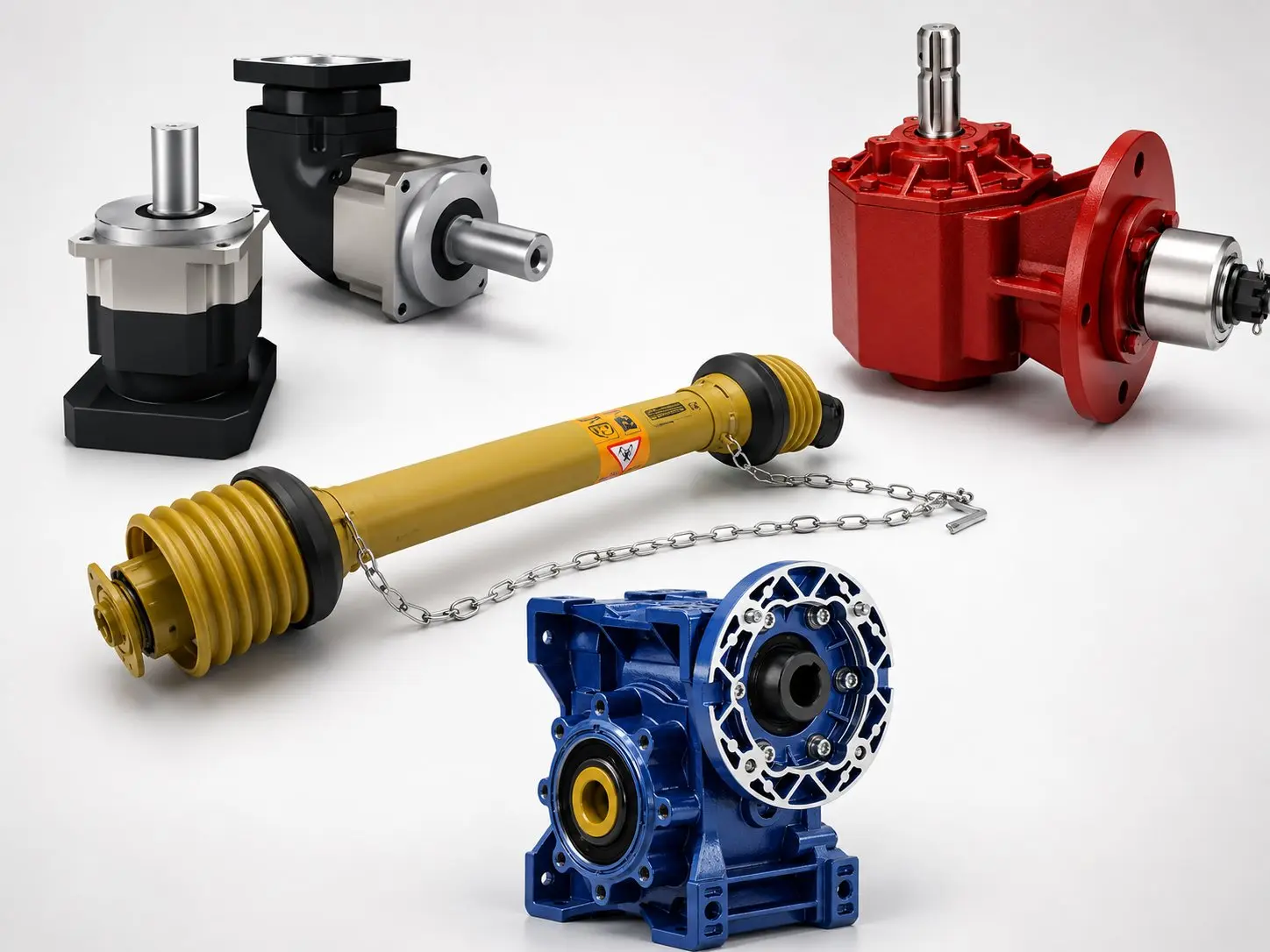
Browse the full EP series catalogue. Related guides on this site: Food & Beverage (same 316L stainless housing option, same FKM seals), Solar/Clean Energy (IP67 outdoor sealing context), Service Life (L10 calculation for marine auxiliary drives). External: cvjointdriveshaft.com.
Frequently Asked Questions — Marine Gearbox Specification
Can I use EP-FAD with standard IP65 on a vessel if the gearbox is inside a weathertight housing?+
What is the difference between NYOGEL 792D and the oil used in ROV pressure-compensated gearboxes?+
How does wave shock affect gearbox selection compared to logistics jam events?+
Is there a standard gearbox specification for vessels operating in Arctic conditions?+
What is the service life expectation for marine deck gearboxes, and is there a maintenance schedule?+
Editor: Cxm