Engineering Fundamentals
What Backlash Is, How It Is Measured, and How to Calculate the Grade Your Application Requires
Backlash Grade Selection Calculator — Required Grade from Axis Radius and Linear Accuracy
The required backlash grade for any rotary axis follows directly from two parameters: the radius from the output shaft centreline to the point where positioning accuracy is specified (r, in mm), and the maximum acceptable linear positional error at that point (δ, in mm). The relationship is:
The table below pre-calculates this formula for eight common application configurations, showing the arc-min value that corresponds to different linear accuracy requirements, and which EP-series grade satisfies each requirement — before and after servo compensation (which typically reduces effective backlash impact by 60–70% through direction-reversal anticipation).
| Application / Drive Point |
Radius r (mm) |
Required Accuracy δ |
Max Backlash θ (arc-min) no compensation |
Max Backlash θ (arc-min) with compensation |
Without Compensation → Grade |
With Servo Compensation → Grade |
EP-Series Recommendation |
|---|---|---|---|---|---|---|---|
| CNC 5-axis rotary table B/C r = 315 mm |
315 | ±0.02 mm H7 bore tolerance |
0.22 arc-min
(0.02÷315)×3438
|
0.55 arc-min
÷ 0.4 (60% comp.)
|
Below P0
Not achievable
|
P0 ≤1
Satisfies requirement
|
EP-FAB/FAD P0 Servo compensation essential; P0 with compensation achieves ±0.02 mm |
| Industrial robot TCP J4–J6 wrist r = 400 mm reach |
400 | ±0.05 mm Arc welding TCP |
0.43 arc-min
(0.05÷400)×3438
|
1.07 arc-min
÷ 0.4
|
P0 ≤1
P0 required
|
P1 ≤3
P1 with comp. works
|
EP-FAB/FADS P0 or P1 P0 without compensation; P1 with servo compensation both satisfy ±0.05 mm |
| Offset press cylinder drive r = 200 mm |
200 | ±0.10 mm Commercial offset register |
1.72 arc-min
(0.10÷200)×3438
|
4.30 arc-min
÷ 0.4
|
P1 ≤3
P0 for service life
|
P2/Std ≤5–8
But backlash grows
|
EP-FAD P0 recommended P1 adequate at start; P0 preferred for ≥5M impression service life wear budget |
| Laser cutting gantry belt axis r = 50 mm pulley |
50 | ±0.05 mm Grade A kerf quality |
3.44 arc-min
(0.05÷50)×3438
|
8.60 arc-min
÷ 0.4
|
P1 ≤3
P1 or better
|
Std ≤8
But hub eccentricity dominates
|
EP-FAL P0/P1 Note: hub eccentricity dominates vs. backlash here — FAL integrated pulley more important than P0 vs P1 |
| Rotary indexing carousel r = 150 mm |
150 | ±0.10 mm Station registration |
2.29 arc-min
(0.10÷150)×3438
|
5.73 arc-min
÷ 0.4
|
P1 ≤3
P1 required
|
P2 ≤5
P2 with compensation
|
EP-FAB/FAD P1 P1 without compensation satisfies ±0.1 mm at 150 mm radius |
| AGV traction drive wheel r = 75 mm wheel |
75 | ±2.0 mm Closed-loop speed only |
91.7 arc-min
(2.0÷75)×3438
|
229 arc-min
÷ 0.4
|
Std ≤8
Economy grade adequate
|
Std ≤8
Economy grade
|
EP-FPG/FPGA Std Precision is irrelevant here — select for efficiency (≥97%) and IP65, not grade |
| Precision seeder metering disc r = 30 mm disc |
30 | ±0.5 mm Seed spacing |
57.3 arc-min
(0.5÷30)×3438
|
143 arc-min
÷ 0.4
|
Std ≤8
Economy adequate
|
Std ≤8
|
EP-FPG P2 Grade is not the limiting factor; select for IP65, chemical resistance, efficiency |
| Semiconductor wafer handler r = 350 mm arm |
350 | ±0.01 mm Slot alignment |
0.098 arc-min
(0.01÷350)×3438
|
0.245 arc-min
÷ 0.4
|
Below P0
Harmonic drive
|
P0 ≤1
P0 + full comp.
|
EP-FAD P0 + special ratio Requires full servo compensation; consider special ratio i=21 or i=31 for resolution |
Formula: θ (arc-min) = (δ ÷ r) × 3438. Servo compensation factor 0.4 (60% effectiveness) is representative for well-tuned modern servo drives; actual compensation effectiveness depends on servo bandwidth, encoder resolution, and tuning. These calculations give the maximum permissible gearbox backlash — the actual application may have additional error sources (bearing clearance, lead screw pitch error, belt compliance) that must be subtracted from this budget before selecting grade. Use this table as a starting point, not a final specification.
Grade Specifications
P0, P1, P2, and Standard Grade — What Changes Between Grades and What Does Not
A common misconception is that a higher-grade gearbox is “better” in all respects than a lower-grade unit. In Korea Ever-Power’s EP-series, higher backlash grades reflect tighter manufacturing tolerances and more rigorous selection testing — but the gear accuracy class (DIN Class 5 across all precision grades), lubrication, IP rating, and design life are identical. What changes is the backlash specification and, at Korea Ever-Power, the depth of individual unit measurement documentation.
| Parameter | P0 ≤1 arc-min |
P1 ≤3 arc-min |
P2 ≤5 arc-min |
Standard ≤8 arc-min |
Notes |
|---|---|---|---|---|---|
| Backlash (max) | ≤1 arc-min | ≤3 arc-min | ≤5 arc-min | ≤8 arc-min | Measured at output shaft under 2% rated torque; all grades use same measurement method |
| Gear accuracy class | DIN Class 5 | DIN Class 5 | DIN Class 5 | DIN Cl. 6–7 (FPG/FPGA) |
Same DIN Class 5 across P0/P1/P2 — gear accuracy does not change with grade; only the sorting/selection changes |
| Per-unit backlash measurement |
✓ Measured value stamped |
✓ Measured value stamped |
✓ Grade stamped |
Grade stamped |
P0/P1: exact measured value (e.g., 0.78 arc-min) stamped — enables wear tracking; P2/Std: grade only |
| IP rating | IP65 (every unit) | IP65 (every unit) | IP65 (every unit) FAB/FAD/FAL |
IP64 (every unit) IP65 option |
IP rating is independent of backlash grade — all EP-series receive individual IP pressure test regardless of grade |
| Lubrication | NYOGEL 792D | NYOGEL 792D | NYOGEL 792D | CASTROL LMX (FPG/FPGA) |
Lubrication is determined by series (FAB/FAD/FAL/FALR = NYOGEL; FPG/FPGA = CASTROL LMX) — not by grade |
| Design life | 20,000–30,000 hr (by series) |
20,000–30,000 hr (by series) |
20,000–30,000 hr | 20,000 hr S5 | Design life is determined by series and rated load — not by grade; P0 and P1 within the same series have identical life |
| Motor adapter | C1–C10 Universal | C1–C10 Universal | C1–C10 Universal | C1–C10 Universal | Same C1–C10 adapter across all grades — upgrading from P1 to P0 requires only a gearbox swap, not motor re-qualification |
| Relative unit cost (same series) |
100% (reference) | ~80–85% | ~65–70% | ~50–60% | Within the same series and frame size; cost difference reflects tighter measurement selection, not different components |
| Typical applications | CNC rotary table, surgical robot, semiconductor wafer | Robot J1–J3, press cylinder, AS/RS crane, PACK robot | Diagnostic instrument, knitting feed, formation tester | AGV wheel, conveyor, seeder, stenter transport | Grade is driven by application accuracy requirement from the calculator table above, not by general “quality” judgment |
Servo Compensation
Servo Backlash Compensation — What It Achieves and Where It Fails
Application Examples
Eight Grade Selection Examples — Applying the Calculator to Real Applications
The following examples apply the grade selection calculator from Section 1 to real drive applications across the industries covered in Korea Ever-Power’s application guide series. Each example shows the calculation, the grade decision, and the reasoning — including cases where grade is not the primary selection criterion.
Selection Checklist
Grade Selection Checklist — Five Steps From Application Requirement to Final Grade
Apply these five steps in sequence for every axis that requires backlash grade specification. The most common engineering error is skipping Step 1 (the calculation) and defaulting to P0 “to be safe” on axes where P0 provides no benefit over P1 — and paying the cost premium unnecessarily. The second most common error is the reverse: specifying P2 on an axis where the application actually requires P1, then discovering the requirement is not met at customer acceptance.
Production Quality
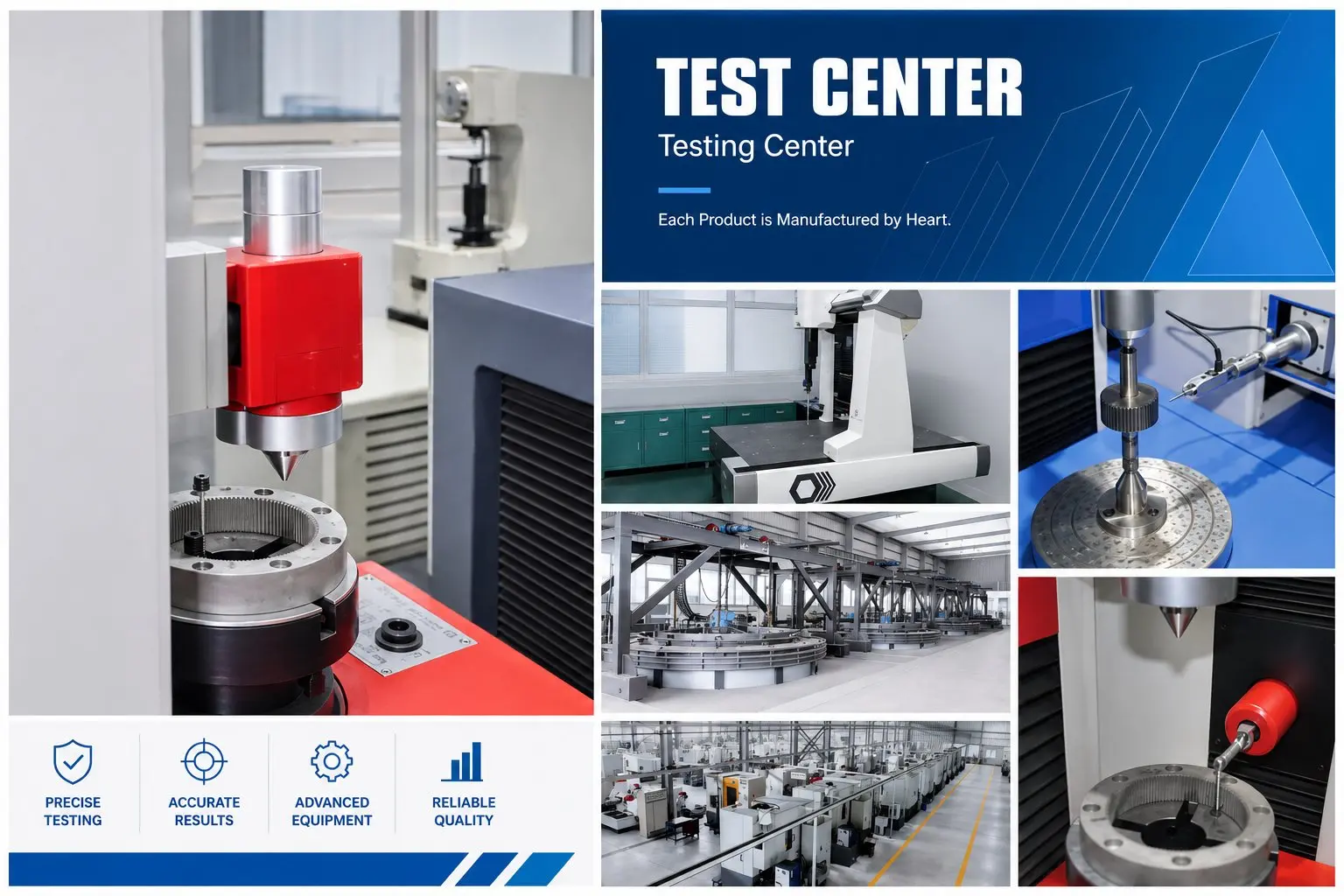
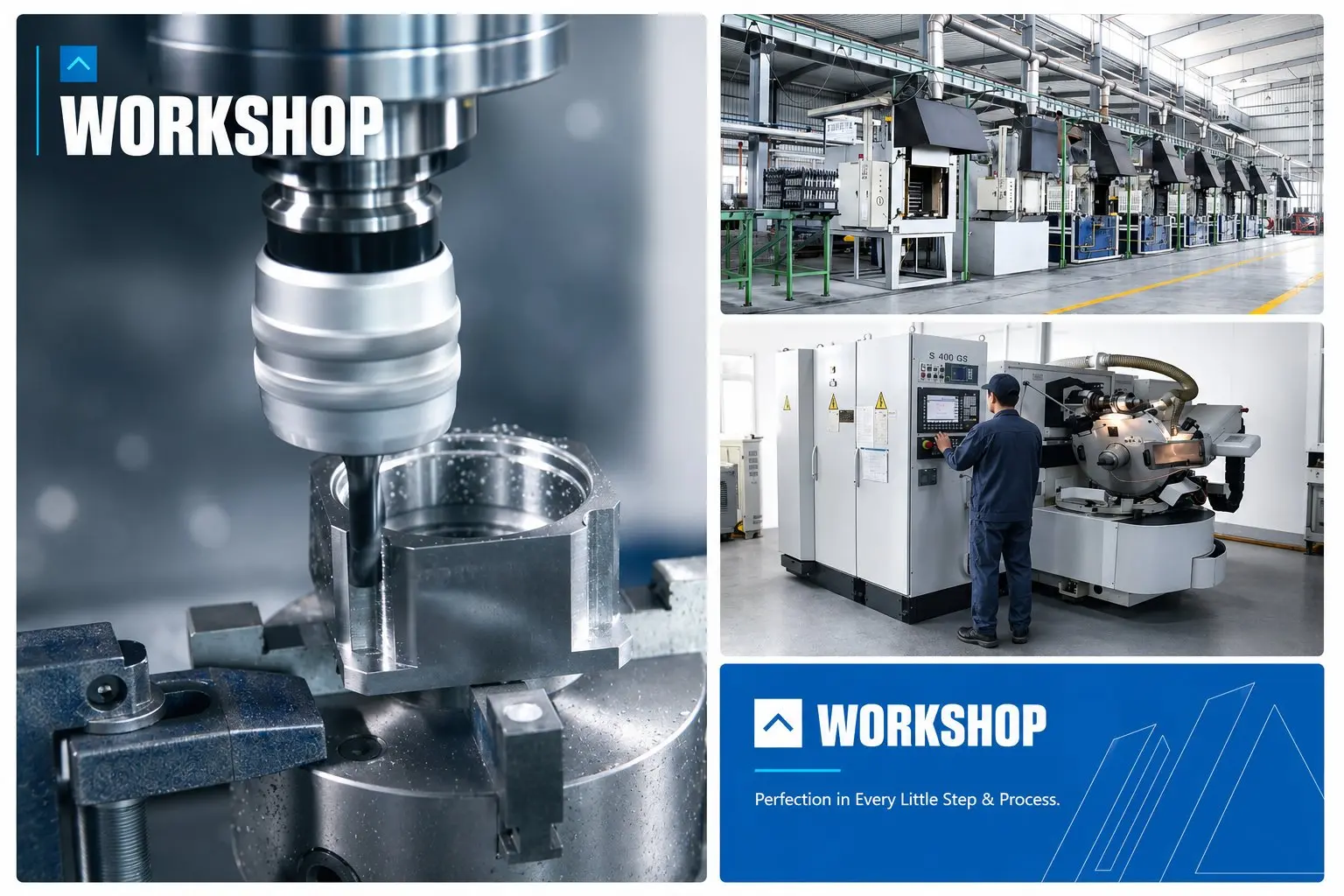
How Korea Ever-Power Produces and Verifies Backlash Grade — DIN Class 5 Grinding and Per-Unit Measurement
Related Technical Guides and Application Articles
Frequently Asked Questions — Backlash Grade Selection
Editor: Cxm