Engineering Context
Why Battery Gigafactory Automation Demands Two Completely Different Gearbox Architectures
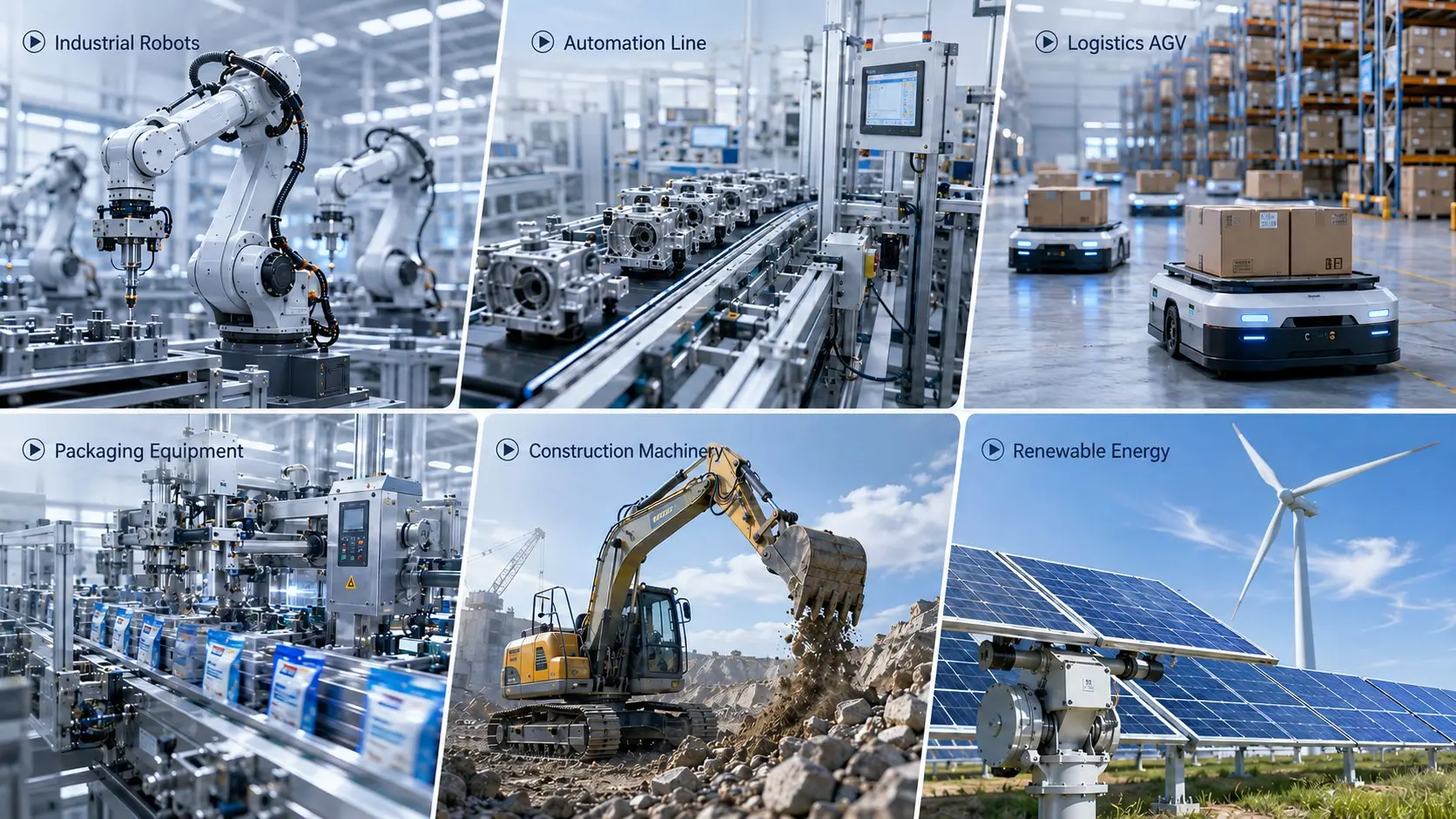
Gigafactory Production Line — Stage-by-Stage Gearbox Series Assignment
The following map shows how the EP-series gearboxes distribute across a typical lithium-ion pouch/prismatic cell gigafactory line, from electrode preparation through module assembly. Each stage has distinct motion requirements that determine which series is correct.
Application Scenarios
Six Battery & EV Manufacturing Applications — Series, Specification, and Engineering Rationale
From electrode winding to solid-state battery pilot lines, the six scenarios below cover the drive applications that battery equipment engineers encounter most frequently when specifying gearboxes for new gigafactory automation projects. Each card includes the series rationale and the key engineering constraint that drives the selection.
Technical Specifications
EP-Series Battery Application Specification Matrix
The following table maps each battery production stage to the recommended series and critical specifications. Frame sizes, ratios, and backlash grades are application-specific — use this table as the starting point before requesting a datasheet and application engineering review from Korea Ever-Power.
| Production Stage / Drive | Recommended Series |
Frame (mm) |
Backlash Grade |
Ratio Range |
Max rpm |
Life (hr) |
Key Selection Reason |
|---|---|---|---|---|---|---|---|
| Electrode coater mandrel | EP-FALR P1 | 110–190 | ≤2 arc-min | 80–180:1 | 3,000 | 30,000* | Single-unit 180:1; integrated belt pulley; no tandem coupling; motor ⊥ mandrel |
| Electrode slitter rewind shaft | EP-FALR P1 | 090–150 | ≤2 arc-min | 50–100:1 | 4,000 | 30,000* | Right-angle compact; single unit high ratio; tension control stability |
| Cylindrical cell winder spindle | EP-FALR P1 | 090–150 | ≤2 arc-min | 50–100:1 | 4,000 | 30,000* | Compact R/A; high-speed winding; 30,000 hr S5 life |
| Assembly robot J4/J5/J6 wrist | ★ EP-FADS P0 | 047–090 | ≤1 arc-min | 5–16:1 | 8,000 | 30,000 | −22 mm axial vs FAD+adapter; direct-insert motor; cleanroom cable routing inside link |
| Assembly robot J1/J2/J3 base | EP-FAB P1 | 090–180 | ≤3 arc-min | 10–50:1 | 4,000 | 20,000 | Max torque 2,000 Nm; square flange; individual backlash stamp for OEM audit |
| Module assembly / PACK robot | EP-FAD P1 | 090–110 | ≤3 arc-min | 10–30:1 | 10,000 | 30,000 | 30,000 hr for 3-shift continuous; 10,000 rpm for fast inter-station travel |
| Formation / aging tester press | EP-FPG P2 | 060–090 | ≤5 arc-min | 10–30:1 | 2,000 | 20,000* | Economy tier for high unit count (200–1,000 channels); cleanroom; long maintenance interval |
| Solid-state battery press axis | EP-FAB P0 | 090–110 | ≤1 arc-min | 10–40:1 | 3,000 | 20,000 | P0 pressure repeatability; zero lube particles (NYOGEL 792D); IP65; pilot line traceability |
| Inter-stage conveyor / transfer | EP-FPG / FPGA | 040–120 | ≤8 arc-min | 10–50:1 | 3,000 | 20,000* | Economy tier; ≥97% efficiency; round/square housing press-fit; cleanroom IP64 |
* FALR/FPG: 30,000 hr / 20,000 hr S5 intermittent; 15,000 hr / 10,000 hr S1 continuous. All FAD/FADS/FAB values are S1 continuous. C1–C10 motor adapter applies to all series.
Engineering Insight
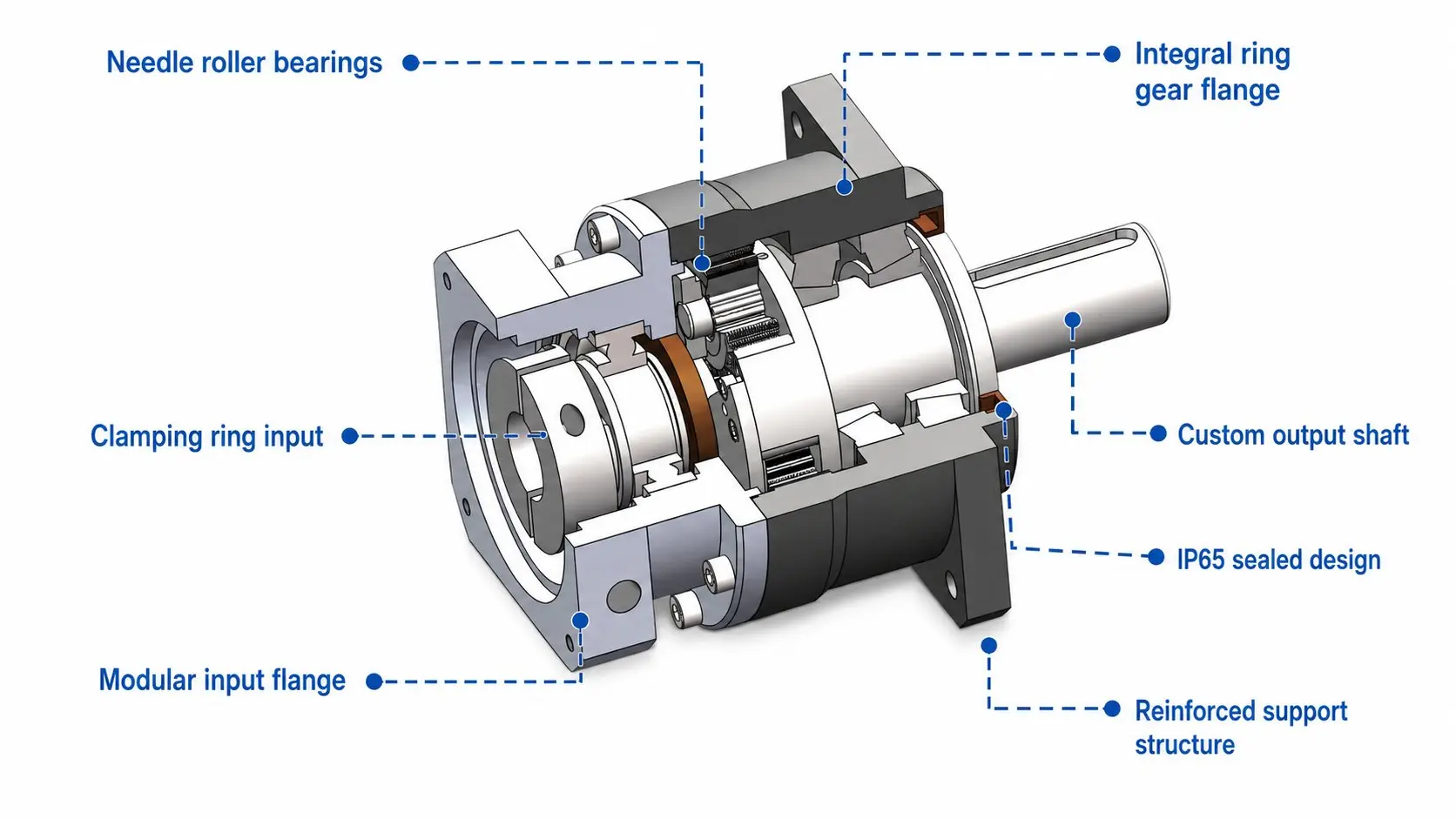
Inside the EP-FALR — Why Single-Unit 180:1 Solves the Electrode Winder Problem
Selection Guide
Battery Gearbox Selection Decision Matrix — 5 Questions Across Two Drive Types
Because battery gigafactory automation spans two distinct drive architectures — winding (high ratio, right-angle, belt output) and robotics (precision, compact, cleanroom) — this decision matrix splits into two parallel paths at Q1. Work through the relevant path for your application. If your project includes both types, apply each path independently to each drive point.
Manufacturing Quality
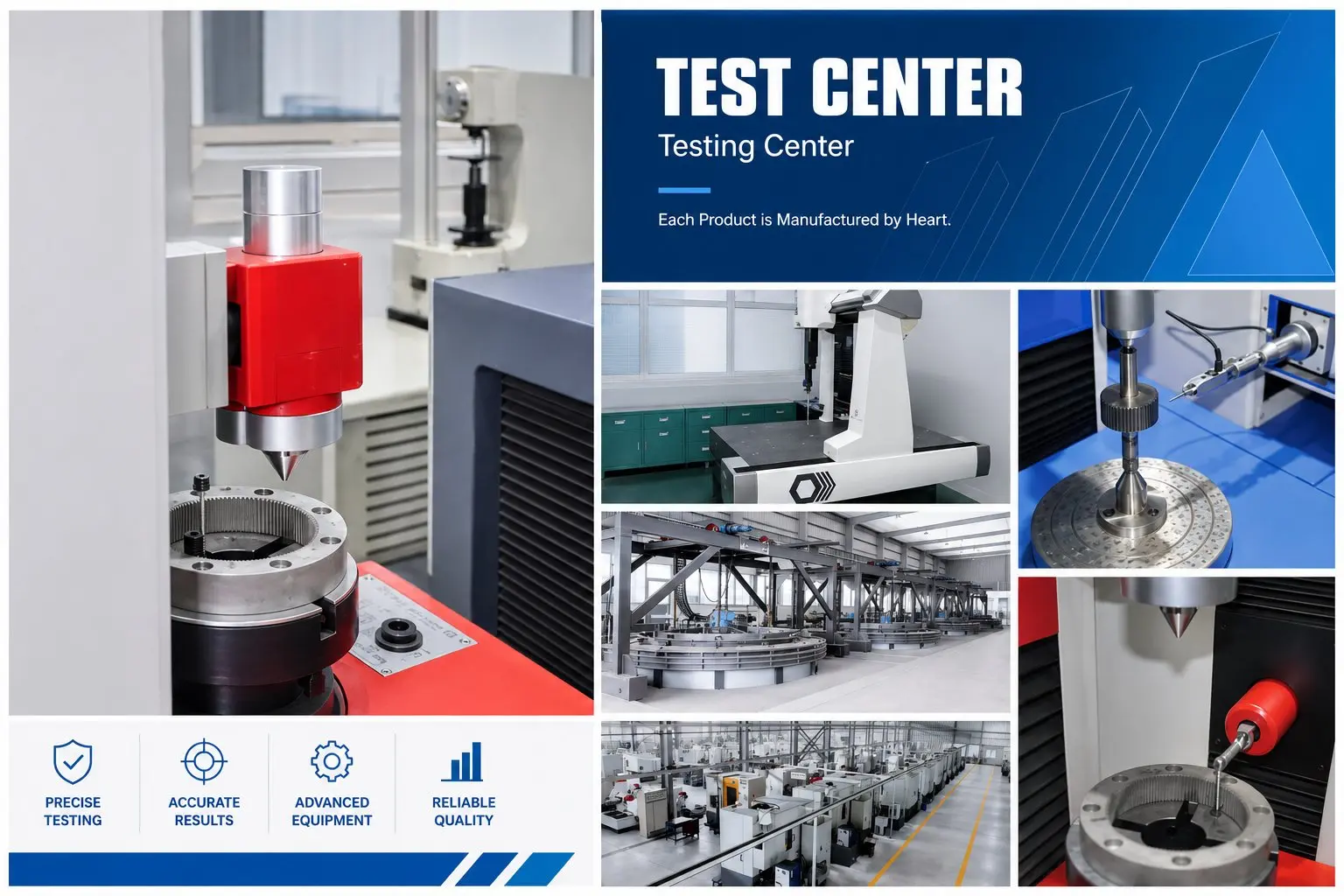
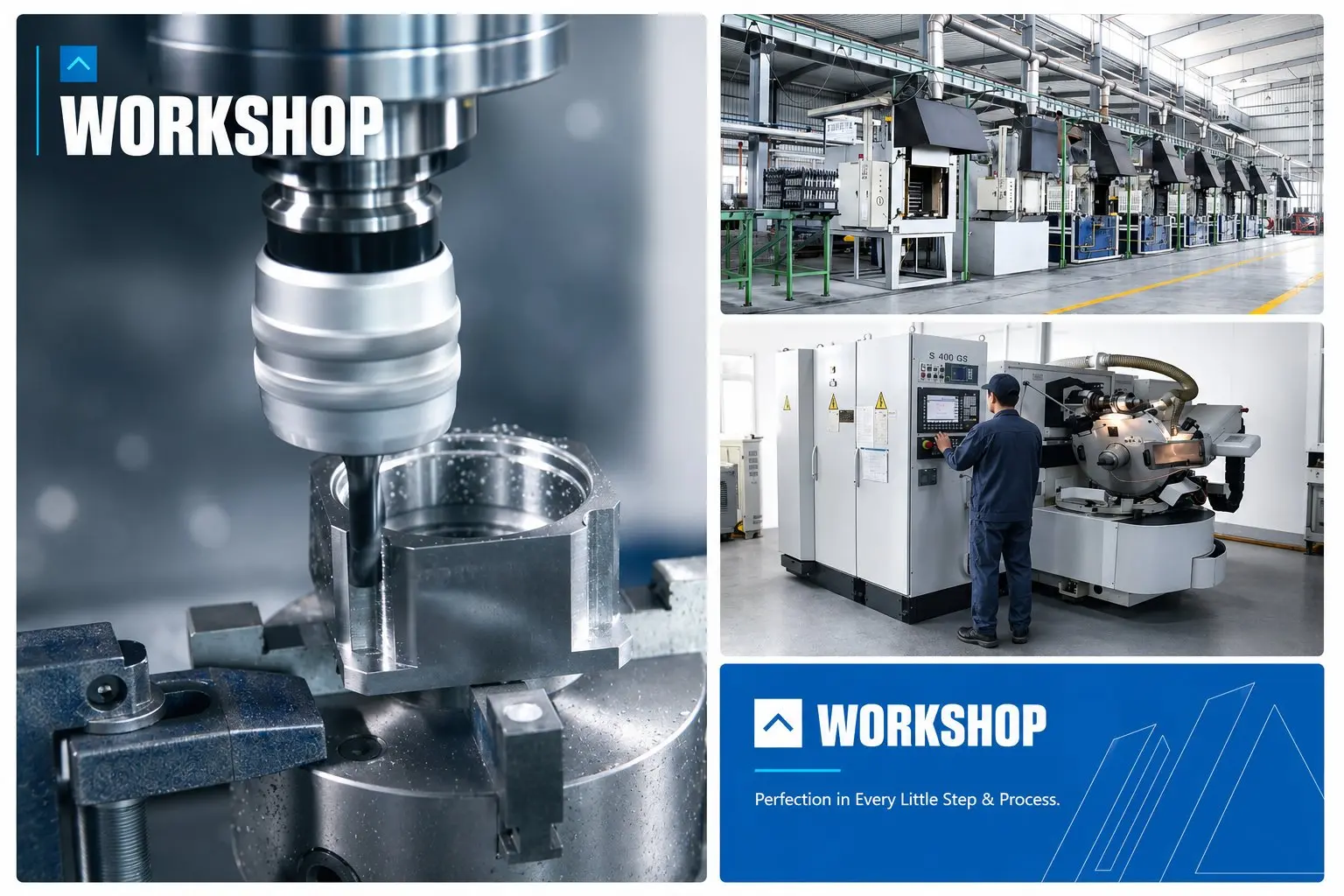
Korea Ever-Power Production — Why Battery OEM Audits Accept EP-Series Traceability
EP-FADS / EP-FALR vs. European Premium — Battery Application Comparison
| Technical Attribute | European Premium (Neugart, Apex) |
Korea Ever-Power EP-FADS / EP-FAB / EP-FAD |
Korea Ever-Power EP-FALR |
|---|---|---|---|
| Gear accuracy | ✓ DIN Class 5 | ✓ DIN Class 5 (5-axis CNC) | ✓ DIN Class 5 |
| Direct-insert (FADS-type) | Premium option (custom) | ★ Standard catalogue item | N/A (R/A series) |
| Single-unit 180:1 R/A + belt | ✗ Custom order only | N/A (inline series) | ★ Standard catalogue item |
| Per-unit backlash stamp | ✓ Yes | ✓ Yes (every unit) | ✓ Yes (every unit) |
| IP65 every unit | Sample test | ✓ Every unit tested | ✓ Every unit tested |
| NYOGEL 792D cleanroom lube | ✓ Yes | ✓ Yes (FADS/FAB/FAD) | CASTROL LMX |
| C1–C10 universal adapter | Brand-specific | ✓ All 8 series | ✓ All 8 series |
| Unit price (P1 grade) | 100% benchmark | ★ ~60–75% | ★ ~65–80% |
Korea Ever-Power does not sell counterfeit products and does not claim to manufacture products identical to named brands. Comparative data based on publicly available specifications and customer substitution test results from Korean battery equipment OEM projects.
Customer Feedback
What Battery Equipment Engineers Say About EP-FADS and EP-FALR
“We designed the J5/J6 link on our pouch-cell assembly robot around EP-FADS. The 22 mm axial saving compared to FAD-plus-adapter let us run the encoder cable inside the link housing rather than externally — which was a hard requirement from the battery OEM for cleanroom Class-4 certification. The unit also had the stamped P0 backlash grade on the nameplate, which went directly into our qualification documentation package. 14 months into production, no issues.”
“The electrode coater we build uses a winding mandrel with 120:1 ratio requirement and the motor perpendicular to the axis. Our previous design used a tandem right-angle gearbox plus a belt-and-hub arrangement — we had persistent tension oscillation at belt rotation frequency. Switching to EP-FALR eliminated the tandem coupling entirely. The integrated pulley output means the belt runs directly on the gearbox shaft. Tension oscillation amplitude dropped from ±8% to ±1.2% of set tension. The customer’s electrode coating uniformity spec was met on the first production run.”
“We specify EP-FAD P1 on our PACK assembly robot for the main joint axes. The 30,000-hour S1 design life gives us confidence that the robot won’t require gearbox replacement within a planned 4-year major maintenance window, even at three-shift operation. The C1–C10 motor adapter meant we could standardise on Yaskawa motors across our entire product line — FAB for winding, FAD for assembly, FPG for conveyor — with one adapter catalogue item covering all three. That procurement simplification alone justified the switch.”
Related EP-Series — Complete Battery Line Coverage
Frequently Asked Questions — Battery & EV Gearbox Selection
Editor: Cxm