Engineering Context
Roll Quality Starts at the Gearbox — Why Winding Tension Uniformity Is a Drive-Train Problem

Roll & Fabric Defect Origin Map — From Symptom to Gearbox Root Cause
When a winding, slitting, or converting machine produces defective product, the symptoms appear in the roll or fabric but the root cause is often in the drive train. The following map connects observable defect types to their mechanical origin and to the correct EP-series solution. This is a first-pass diagnostic guide — use it to identify whether a gearbox change can resolve the defect before exploring process parameter adjustments.
| Defect / Symptom | Mechanical Origin (drive-train cause) |
Gearbox Mechanism | Detectable by Controller? |
EP-Series Solution |
Expected Result |
|---|---|---|---|---|---|
| Periodic tension bands Visible streaks at fixed spacing in web or film |
Inter-stage torsional compliance in tandem gearbox arrangement | Belt compliance between two-stage tandem gearboxes causes periodic torque variation at belt rotation frequency; appears as tension ripple at mandrel | Partially — controller over-corrects and amplifies | ★ EP-FALR P1 | Single-unit 180:1 eliminates inter-stage coupling; tension oscillation: ±8% → ±1.2% |
| Periodic registration error Print colour offset at fixed interval in roll-to-roll printing |
Hub eccentricity at print roller drive shaft | Separate pulley hub on roller drive gearbox output; hub bore/shaft TIR of 0.05–0.12 mm produces periodic registration error at roller rotation frequency | No — periodic, fixed frequency | ★ EP-FAL P1 | Integrated pulley eliminates hub eccentricity; periodic registration error: 0.08 mm → ≤0.015 mm |
| Layer shift / telescoping Wound layers displaced axially — roll unusable |
Backlash at mandrel drive during tension reversal or speed change transient | Backlash accumulation in tandem gearbox (each stage contributes separately) creates dead zone during speed ramp; mandrel momentarily free to advance under inertia | Partially — at transients only | EP-FALR P1 or upgrade to P0 |
Single-unit gearbox eliminates tandem backlash stack; ≤2 arc-min P1 significantly reduces transient dead zone |
| Winding hardness variation Roll hard in some zones, loose in others on same diameter |
Backlash growth in ageing gearbox — torque dead zone increases with wear | As gear tooth surfaces wear, backlash increases progressively; tension controller compensation cannot keep up with slowly growing dead zone; winding hardness becomes non-uniform | No — gradual drift, not detected | EP-FALR P1 DIN Cl-5 grade-stamped |
DIN Class 5 gears start with lower backlash; larger wear budget before P1 → P2 degradation; per-unit stamp documents starting value for condition monitoring |
| Slitting width variation Slit web width inconsistent across rewind shafts |
Differential speed error between rewind shafts due to backlash mismatch between individual gearboxes | In multi-shaft slitting machines, gearboxes without per-unit backlash measurement may have different actual backlash values within the “P1” batch — differential torque delivery between shafts causes speed divergence and web width variation | Partially — by tension feedback | EP-FALR P1 individual stamp |
Per-unit backlash stamp confirms matched values across all rewind shaft gearboxes; batch-to-batch consistency maintained |
| Yarn tension irregularity Knitting / weaving: uneven stitch/pattern density |
Backlash in feed drive gearbox causing cyclic yarn speed error | In closed-loop tension control, large backlash (≥10 arc-min, typical worm) causes hunting in the tension controller — high-frequency torque commands that exceed the motor’s ability to respond, manifesting as yarn feed rate variation | Partially — controller hunts | EP-FPG P2 ≤5 arc-min |
FPG P2 (≤5 arc-min) vs worm (≥10 arc-min) reduces controller hunting amplitude; stable closed-loop tension control restored |
| Gearbox overheating Worm gearbox too hot to touch at rated production speed |
Worm gear sliding-contact efficiency loss (≤65%) converted to heat in lubrication chamber | In a 300 W motor with worm gearbox at 65% efficiency: 105 W dissipated as heat. In a continuous-duty textile drive running 16 hr/day, this heat load raises lubricant temperature beyond the rated range of standard mineral-oil worm gearbox grease | Yes — thermal trip | EP-FPG/FPGA ≥97% efficiency |
≥97% efficiency: same 300 W motor dissipates only 9 W — 92% heat reduction; no thermal trip at rated production speed |
| IP seal failure / lubricant contamination Dye or steam entering gearbox on stenter/dyeing machine |
Inadequate IP protection — batch-sample-tested seals allow ingress in field | Steam at 120°C thermal cycling causes gearbox seal expansion/contraction; seals tested to IP65 on batch samples may fail on individual production units; dye ingress accelerates gear corrosion and backlash growth | Yes — at late stage (black grease visible) | EP-FPGA IP65 every unit tested |
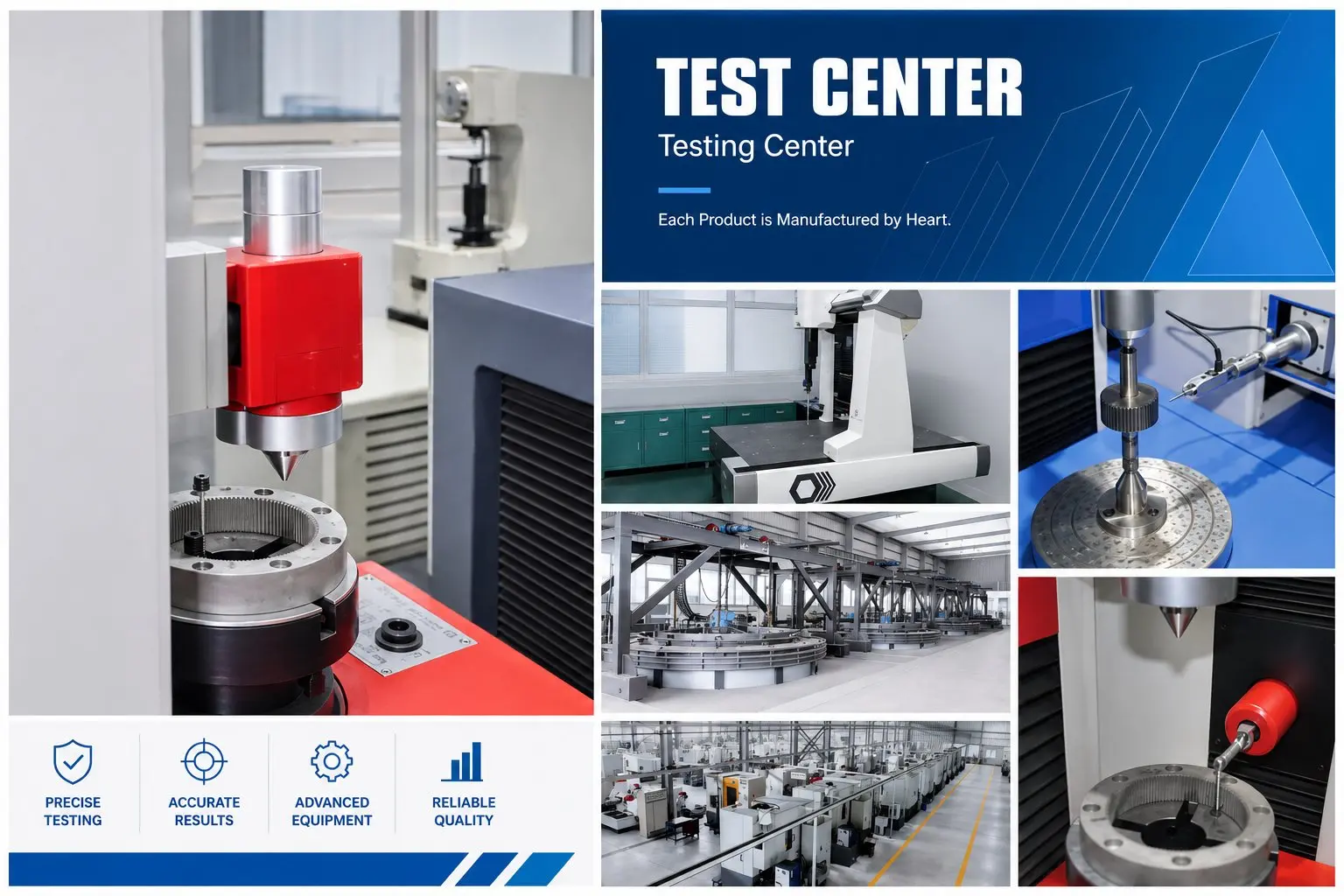
IP65 pneumatic decay test on every unit (not batch sample) eliminates the marginal-seal population before shipment |
Tension oscillation values (±8% vs ±1.2%) documented in Korean electrode coating machine application. Registration error values (0.08 mm → 0.015 mm) documented in Korean CNC router application with same integrated pulley mechanism. Other values are representative engineering estimates based on typical drive-train parameters.
Application Scenarios
Six Textile & Film Converting Applications — Engineering Rationale and Series Selection
Textile and film converting encompasses winding precision at one end (EP-FALR for tandem elimination) and high-volume process drives at the other (EP-FPG/FPGA for economy). The six scenarios below span this range, with engineering rationale for each series selection and the specific mechanical problem each resolves.
Technical Specifications
EP-Series Textile & Film Converting Specification Matrix
The table below spans from the highest-precision winding application (EP-FALR P1 for film winders) to the economy process drives (EP-FPGA for stenter transport). All series share the C1–C10 universal motor adapter — a single motor qualification covers the entire factory BOM regardless of which series is specified at each drive point.
| Drive Point / Machine Type | Series | Frame (mm) | Backlash | Ratio | Max rpm | IP | Life (hr) | Key Selection Reason |
|---|---|---|---|---|---|---|---|---|
| Film / foil winder mandrel | ★ EP-FALR P1 | 110–190 | ≤2 arc-min | 80–180:1 | 3,000 | IP65 | 30,000* | Single-unit 180:1; no tandem; integrated belt pulley; tension ±8% → ±1.2% |
| Electrode coating winder | EP-FALR P1 | 110–150 | ≤2 arc-min | 80–120:1 | 3,000 | IP65 | 30,000* | Right-angle; motor ⊥ roll; cleanroom-compatible; precision tension |
| Slitting machine rewind shaft | EP-FALR P1 | 090–150 | ≤2 arc-min | 50–100:1 | 3,000 | IP65 | 30,000* | Per-unit stamp ensures matched backlash across multi-shaft sets; compact R/A |
| Roll-to-roll print / coating roller | EP-FAD P1 | 090–110 | ≤3 arc-min | 5–16:1 | 5,000 | IP65 | 30,000 | Low vibration (helical gears); thermal stability; registration accuracy; solvent IP65 |
| Knitting machine yarn feed | EP-FPG/FPGA | 060–090 | ≤8 arc-min | 10–30:1 | 3,000 | IP64 | 20,000* | Economy; 18% lower cost than FAB; 48–120 feeds per machine; ≤56 dB noise |
| Weaving loom warp beam | EP-FPG P2 | 060–120 | ≤5 arc-min | 10–50:1 | 3,000 | IP64 | 20,000* | Zero relubrication within life (matches loom overhaul interval); economy OEM pricing |
| Non-woven calender roll drive | EP-FPGA | 090–120 | ≤8 arc-min | 10–40:1 | 3,000 | IP64 | 20,000* | Square housing; OEM volume pricing; reliable torque density; long service |
| Dyeing / stenter transport | EP-FPGA | 060–100 | ≤8 arc-min | 10–30:1 | 3,000 | IP65 | 20,000* | IP65 steam/dye chemical; ≥97% efficiency vs ≤65% worm; economy tier |
★ FALR/FPG: S5 intermittent life shown; S1 continuous = 15,000 hr (FALR) / 10,000 hr (FPG). FAD values are S1 continuous. C1–C10 applies to all series.
Engineering Insight
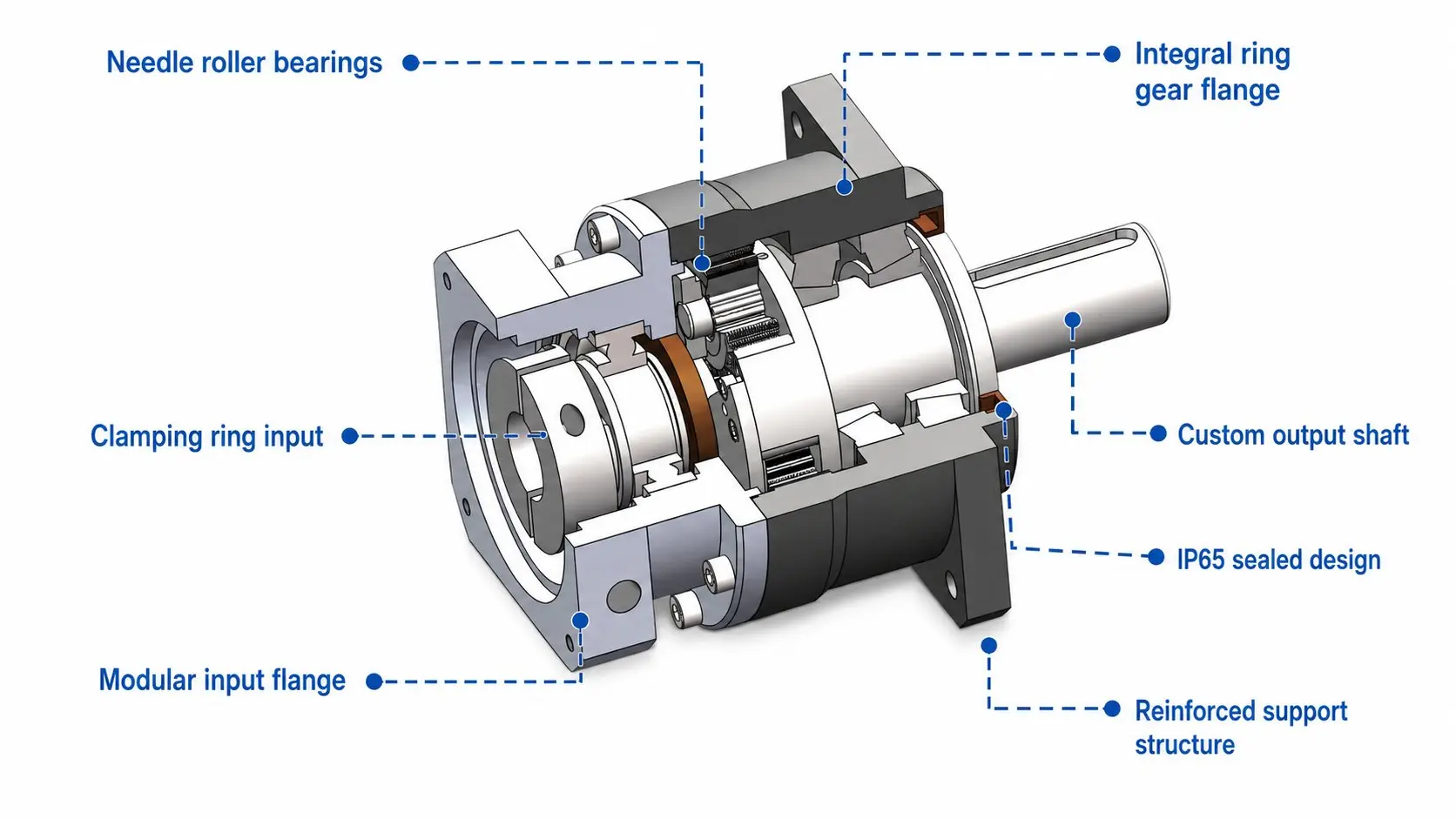
Inside EP-FALR — Why Eliminating the Tandem Coupling Changes Winding Quality
Selection Guide
Textile & Film Converting Gearbox Selection — 5 Questions from Defect Symptom to Correct Series
The selection logic for textile and film converting splits at Q1 between winding/converting precision drives (FALR path) and process drives (FPG/FPGA economy path). The defect map earlier in this article can serve as a first-pass diagnostic — if you’ve identified a roll quality defect, work backwards from the symptom to confirm whether the drive-train is the root cause before proceeding with Q1.
Manufacturing Quality
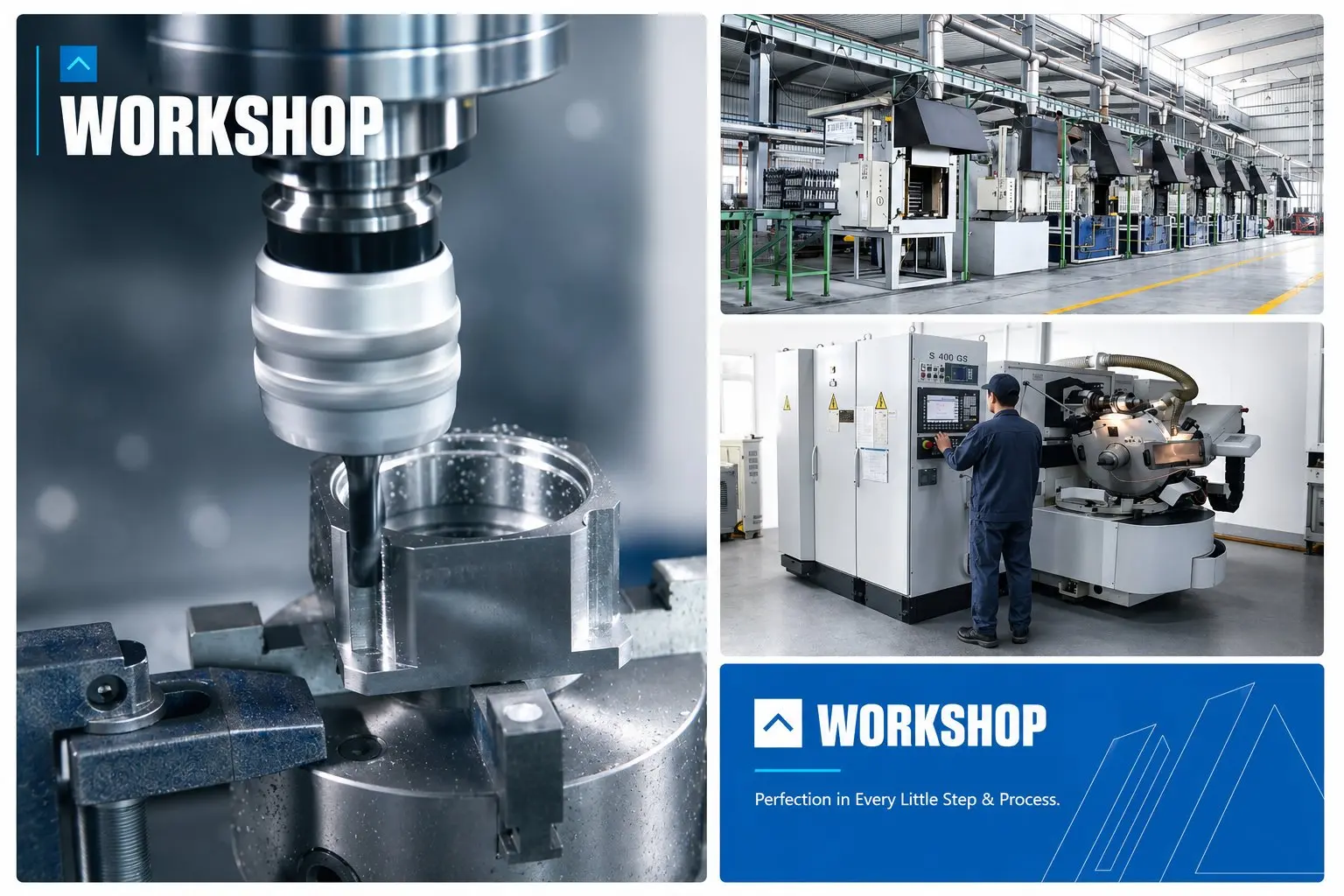
Korea Ever-Power Production — Three Quality Standards That Matter for Winding and Textile Applications
EP-FALR vs. Tandem Gearbox Arrangement — Technical Comparison for Winding Applications
| Attribute | Tandem Gearbox (R/A stage + inline stage + belt hub) |
EP-FALR (single sealed unit) |
Impact on Winding Quality |
|---|---|---|---|
| Number of components | 3–4 (2 gearboxes + belt + hub) | 1 (single sealed unit) | Fewer components = fewer failure modes; shorter assembly time; simpler BOM |
| Inter-stage coupling | Belt + hub: torsional compliance + eccentricity | None — internal shaft only | Eliminates periodic tension excitation at belt rotation frequency |
| Tension oscillation amplitude | ±8% typical (documented) | ±1.2% (documented) | 6.7× improvement — eliminates periodic band defects in wound roll |
| Max ratio (single arrangement) | Limited by inter-stage belt — typically 80–100:1 | 180:1 standard catalogue | Covers all practical winding ratios without adding a third stage |
| Maintenance intervals | Multiple: belt tension, hub fasteners, two lube points | None within 30,000 hr S5 | Sealed lifetime fill; no belt re-tensioning; no hub fastener torque checks |
| Per-unit backlash stamp | Not standard — two separate gearboxes, each batch-sampled | ✓ Single unit, single stamp | Enables matched-set supply for slitting machines; single traceability document per shaft |
Tension oscillation values documented in Korean electrode coating machine application; same mechanism applies to film and foil winding. Component count comparison is for a standard tandem arrangement (right-angle gearbox + inter-stage belt + inline gearbox + belt hub to mandrel).
Customer Feedback
What Textile and Film Converting Machine Engineers Say
“We build film winding machines for the flexible packaging market and had a persistent tension band problem — a repeating streak pattern at a fixed spacing in the wound rolls that our tension controller couldn’t tune out. After diagnostic measurement we traced it to the inter-stage belt in our tandem gearbox arrangement. Switched to EP-FALR 120:1. The tension oscillation amplitude dropped from about ±7% to under ±1.5%. The band pattern disappeared completely. We’ve rebuilt our standard winder drive around EP-FALR and haven’t had a roll quality reject on that machine since.”
“Our slitting machine has 16 rewind shafts. We’d been getting slit width variation of ±0.5 mm across the web — within specification, but at the limit. After investigating, we suspected unequal backlash between rewind shaft gearboxes. Korea Ever-Power supplied 16 FALR units from a matched set — all measured within 0.25 arc-min of each other. Slit width variation dropped to ±0.2 mm. The per-unit backlash stamps on the nameplates also went straight into our quality documentation system. Small details that make a real difference in a precision slitting operation.”
“We replaced worm gear drives on 60 stenter transport zones with EP-FPGA. IP65 was non-negotiable — the stenter environment has steam and dye chemicals and we’d had worm gearbox seal failures every 6–9 months on the previous design. Since switching to FPGA with the per-unit IP65 test, we’ve had zero seal failures in 18 months of 2-shift operation. The efficiency improvement was also significant — the motor drives are noticeably cooler at rated speed, and electricity consumption on that line dropped measurably. The C1–C10 adapter was the same as our knitting machine yarn feed drives, so one motor qualification covered both lines.”
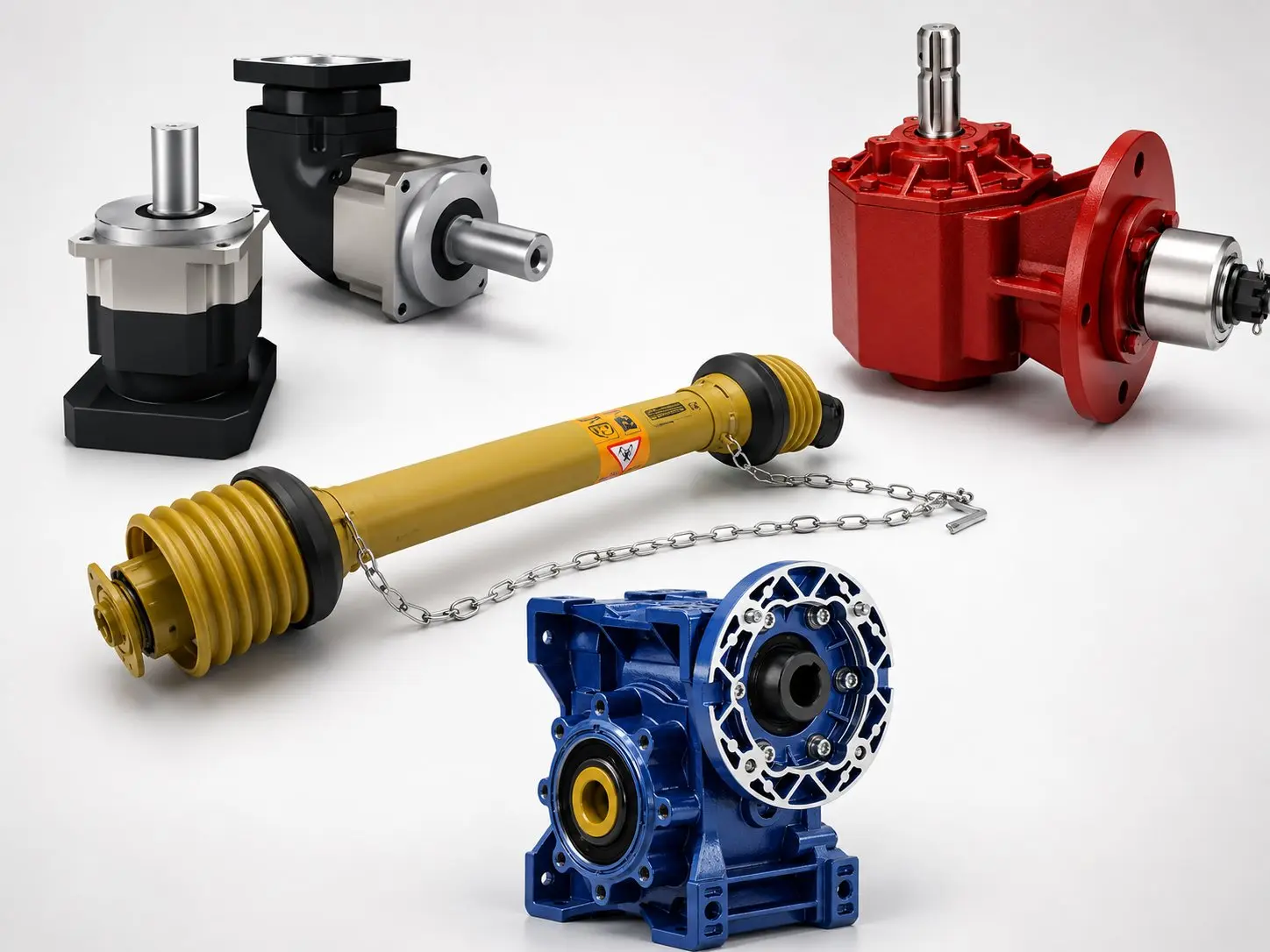
Related EP-Series — Full Textile Factory Coverage
Frequently Asked Questions — Textile & Film Converting Gearbox Selection
Editor: Cxm